Introduction
Automatic cars are everywhere now. From small hatchbacks to premium SUVs, almost every new launch in India comes with an automatic option. Showroom salespeople will tell you the same thing — “Sir, automatic is the future.”
And honestly, they are not wrong.
But here’s what they don’t tell you.
Owning an automatic car in India is not just about convenience. There are hidden realities that most buyers only discover after a few months — sometimes after the first service, sometimes after the first repair bill.
If you are planning to buy an automatic car, this article will save you from expensive surprises. This is not a brochure-style guide. This is what actual owners experience after living with these cars in real Indian conditions.
Understanding Automatic Cars (Beyond the Brochure)
When you hear “automatic”, it sounds like one simple feature.
But in reality, there are multiple types:
- AMT (Automated Manual Transmission)
- CVT (Continuously Variable Transmission)
- Torque Converter
- DCT (Dual-Clutch Transmission)
Most buyers don’t understand this difference — and that’s the first mistake.
Each type behaves differently in:
- Traffic
- Mileage
- Maintenance
- Reliability
If you want a clear explanation, read our detailed guide on car engine and powertrain explained in simple terms (https://carinsighthub.com/car-engine-and-powertrain-the-complete-guide/).
What No One Explains Before You Buy
1. “Automatic” Does Not Mean Smooth
Many first-time buyers expect:
Smooth driving like luxury cars
Reality depends on gearbox type.
- AMT → noticeable jerks
- CVT → smooth but noisy
- DCT → smooth but not in traffic
If you buy based on test drive alone, you may be disappointed later.
2. Traffic Behaviour Is Everything in India
In countries with smooth roads, automatics behave perfectly.
In India:
- Stop-go traffic
- Sudden braking
- Slow crawling
This affects:
- Gearbox heat
- Clutch wear
- Driving comfort
This is why many DCT owners face issues in cities.
3. Mileage Difference Is Not Small
Dealers often say:
“Sir, mileage is almost same”
But in real usage:
- Automatic gives 1–3 km/l less than manual
- In city, difference is even bigger
With petrol prices crossing ₹100, this matters.
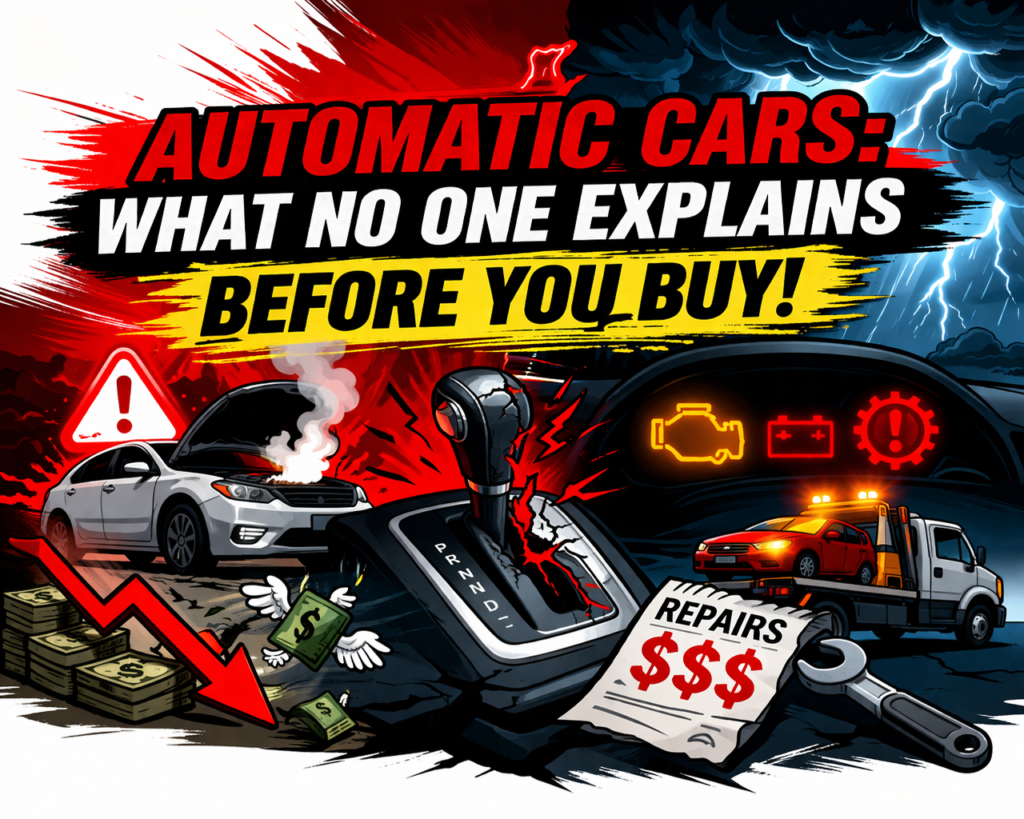
4. Repair Costs Can Shock You
This is the biggest hidden truth.
- Manual repair → ₹5,000–₹15,000
- Automatic gearbox repair → ₹50,000 to ₹2 lakh
And not every mechanic can fix it.
5. Driving Style Needs to Change
Most people don’t realise this.
You cannot drive an automatic like a manual.
Common mistakes:
- Shifting gears without stopping
- Using accelerator in slow crawling traffic
- Keeping car in Drive at signals
These habits reduce gearbox life quickly.
We’ve explained this in detail in our guide on automatic cars people drive wrong in India (https://carinsighthub.com/automatic-cars-are-easier-but-most-owners-drive-them-wrong-indian-reality-exposed/).
6. Not All Automatics Suit Indian Conditions
This is critical.
- AMT → affordable but jerky
- CVT → best for smooth city driving
- Torque converter → reliable but less efficient
- DCT → great performance but not ideal for heavy traffic
Choosing the wrong type leads to regret.
7. Resale Value Depends on Awareness
Automatic demand is growing, but:
- Some buyers still prefer manual
- AMT resale is average
- CVT and torque converter have better acceptance
Market perception matters.
Key Benefits of Automatic Cars (Why People Still Choose Them)
Despite the issues, automatic cars are popular for a reason:
- No clutch in traffic
- Less fatigue in daily commute
- Easy for beginners
- Better comfort in city driving
- Growing demand in resale market
If your daily life involves heavy traffic, these benefits are real.
Step-by-Step Guide: How to Buy the Right Automatic Car
Step 1: Understand Your Driving Pattern
- Heavy city traffic → CVT or torque converter
- Mixed usage → choose based on budget
- Highway focus → DCT can work
Step 2: Don’t Decide Based on Test Drive Alone
Test drives are misleading because:
- Roads are empty
- Drive duration is short
Always:
- Drive in traffic
- Check low-speed behaviour
Step 3: Check Maintenance Reality
Before buying, ask:
- Service cost
- Gearbox repair cost
- Warranty coverage
Also read our guide on car maintenance tips for fluids and filters (https://carinsighthub.com/car-maintenance-tips-fluids-and-filters/) to understand long-term costs.
Step 4: Learn Correct Driving Habits
Automatic cars need a different approach.
Avoid:
- Aggressive acceleration
- Constant creeping
- Incorrect gear shifts
Step 5: Consider Total Ownership Cost
Don’t just look at:
- Car price
Also consider:
- Fuel cost
- Service cost
- Repair risk
Comparison Table: Types of Automatic Gearboxes
| Feature | AMT | CVT | DCT |
|---|---|---|---|
| Cost | Low | Medium | High |
| Smoothness | Low | Very High | High |
| Traffic Comfort | Average | Excellent | Poor |
| Maintenance | Medium | Medium | High |
| Performance | Low | Moderate | Excellent |
Real-Life Example (Indian Buyer Story)
Priya from Chennai bought an AMT hatchback because it was affordable.
Initial experience:
- Easy driving
- Good in traffic
After 1 year:
- Noticed jerks in slow traffic
- Felt lack of power
- Slight drop in mileage
She later realised:
- AMT is not as smooth as expected
- But still manageable for city use
Her takeaway:
“Automatic is good, but I should have understood the type better.”
Common Mistakes to Avoid
- Buying “automatic” without checking type
- Believing showroom mileage claims
- Ignoring traffic conditions
- Driving automatic like manual
- Skipping gearbox service
You can also read our guide on driving habits that secretly damage your car in India (https://carinsighthub.com/driving-habits-that-secretly-damage-your-car-in-india-most-drivers-do-these-daily/).
Expert Tips (From Real Ownership Insights)
- Always match gearbox with your usage
- Avoid DCT if your route has heavy traffic
- CVT is safest for city driving
- Don’t ignore small performance changes
- Invest in proper servicing
If you’re still planning your purchase, go through our detailed car buying guide that actually saves money in India (https://carinsighthub.com/read-this-before-buying-your-next-car-in-india-a-practical-guide-that-actually-saves-you-money/).
Pros and Cons of Automatic Cars
| Pros | Cons |
|---|---|
| Easy driving | Expensive repairs |
| Comfortable in traffic | Lower mileage |
| Beginner-friendly | Sensitive to misuse |
| Growing demand | Higher cost |
Frequently Asked Questions (FAQs)
1. Are automatic cars good for Indian traffic?
Yes, they are excellent for reducing fatigue in heavy traffic.
2. Which automatic gearbox is best?
CVT and torque converter are best for city driving.
3. Do automatic cars give less mileage?
Yes, usually 1–3 km/l less than manual cars.
4. Are automatic cars expensive to maintain?
Regular maintenance is manageable, but repairs can be costly.
5. Is AMT a good option?
Yes, if you want a budget automatic, but expect some jerks.
6. Can beginners drive automatic cars easily?
Yes, they are ideal for beginners.
7. Should I buy automatic or manual?
Depends on your daily usage. Heavy traffic → automatic is better.
Conclusion
Automatic cars are not just a feature upgrade — they are a different ownership experience.
If you understand:
- Gearbox types
- Driving habits
- Maintenance needs
You will enjoy the comfort and convenience.
But if you buy blindly based on:
- “Automatic is better”
- Or just showroom advice
You may face unexpected costs and frustration.
In India, the smartest car buyers are not the ones who buy the most expensive cars — they are the ones who understand their usage and choose accordingly.
And when it comes to automatic cars, that understanding makes all the difference.
References
- Government of India Automobile Portal: https://heavyindustries.gov.in
- NITI Aayog Mobility Reports: https://www.niti.gov.in
- SIAM Reports: https://www.siam.in
- Economic Times Auto: https://auto.economictimes.indiatimes.com
- Investopedia Automobile Industry Analysis: https://www.investopedia.com/articles/investing/090915/automobile-industry.asp
