Introduction
Buying a car in India is a big decision. For many people, it’s the second most expensive purchase after a house. Naturally, buyers spend weeks comparing models, watching YouTube reviews, and visiting showrooms.
But here’s the uncomfortable truth — most car buyers still make mistakes they regret later.
Not because they didn’t research enough, but because they focused on the wrong things.
They compare:
- Mileage
- Features
- Price
But ignore:
- Real-life usage
- Long-term costs
- Driving comfort
- Maintenance reality
And that’s where regret starts.
In this article, I’ll walk you through 5 critical things most Indian buyers ignore, backed by real ownership experiences. If you understand these before buying, you won’t just save money — you’ll avoid years of frustration.
Understanding the Problem: Why Buyers Regret Later
Most buyers don’t make “bad decisions” — they make incomplete decisions.
Showrooms highlight:
- Features
- Discounts
- EMI offers
But they don’t talk about:
- Daily driving experience
- Traffic comfort
- Maintenance headaches
If you want to understand the full buying process properly, go through our detailed used car buying guide for 2025 (https://carinsighthub.com/the-complete-used-car-buying-guide-for-2025/).
The 5 Things Most Buyers Ignore (And Regret Later)
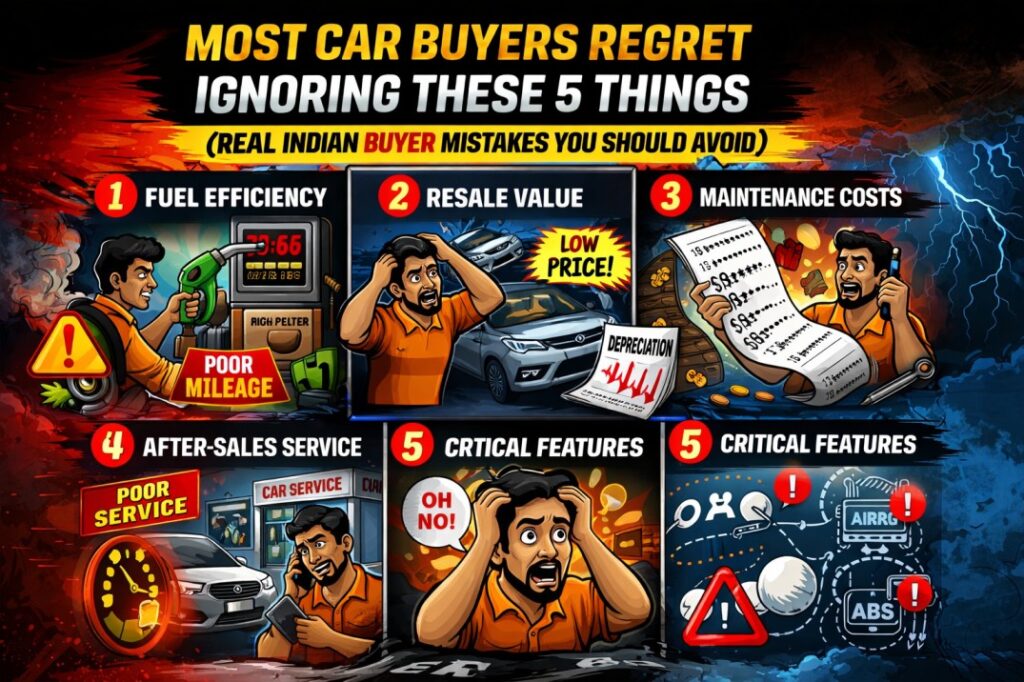
1. Real-Life Driving Conditions (Not Test Drive Experience)
This is the biggest mistake.
Test drives are misleading because:
- Roads are empty
- Time is short
- You’re focused, not relaxed
But your daily driving includes:
- Traffic jams
- Bad roads
- Slow crawling
Real regret:
“Car felt smooth in showroom, but very tiring in daily traffic.”
For example:
- Manual cars feel fine in test drive
- But become exhausting in city traffic
2. Total Ownership Cost (Not Just Car Price)
Most buyers focus only on:
- On-road price
- EMI
But ignore:
- Fuel cost
- Service cost
- Insurance
- Repairs
Real regret:
“Car was affordable, but running cost is too high.”
You can understand this better in our guide on car maintenance cost in India model-wise (https://carinsighthub.com/car-maintenance-cost-guide-india-2025-model-wise/).
3. Choosing the Wrong Type of Car
Many buyers choose based on:
- Looks
- Trends
- Advice from friends
Instead of:
- Their actual usage
Examples:
- Buying SUV for city use
- Buying diesel for low running
- Choosing manual for heavy traffic
Real regret:
“Car doesn’t suit my daily needs.”
Also read our comparison on SUV vs sedan which makes sense in India today (https://carinsighthub.com/suv-vs-sedan-which-one-actually-makes-sense-in-india-today-honest-2026-guide/).
4. Ignoring Driving Comfort
Comfort is underrated during buying.
Buyers focus on:
- Features
- Touchscreen size
- Sunroof
But ignore:
- Seat comfort
- Driving position
- Ease in traffic
Real regret:
“Car has features, but driving feels tiring.”
This is especially true for:
- Long commuters
- City drivers
5. Not Understanding Maintenance Reality
Many buyers assume:
“Servicing will be normal”
But reality varies by brand and type.
Issues include:
- Expensive spare parts
- Limited service centres
- High labour charges
Real regret:
“Maintenance is too expensive.”
You should always understand basics like fluids and servicing from our guide on car maintenance tips for fluids and filters (https://carinsighthub.com/car-maintenance-tips-fluids-and-filters/).
Key Benefits of Avoiding These Mistakes
If you consider these 5 factors before buying, you will get:
- Better driving experience
- Lower long-term cost
- Less regret after purchase
- Higher resale value
- Stress-free ownership
Step-by-Step Guide: Smart Car Buying Approach
Step 1: Define Your Usage Clearly
Ask yourself:
- City or highway?
- Daily or occasional?
- Short or long drives?
Step 2: Set a Realistic Budget
Include:
- Car price
- Insurance
- Maintenance
Step 3: Test Drive in Real Conditions
- Drive in traffic
- Try bad roads
- Check comfort
Step 4: Research Ownership Experience
Don’t just watch reviews.
Talk to:
- Existing owners
- Local mechanics
Step 5: Think Long-Term
Ask:
- Will this car suit me after 3 years?
Comparison Table: Smart Buyer vs Common Buyer
| Feature | Smart Buyer | Common Buyer |
|---|---|---|
| Focus | Usage | Features |
| Test drive | Real conditions | Short drive |
| Budget | Total cost | Only car price |
| Research | Ownership experience | Online reviews |
| Decision | Practical | Emotional |
Real-Life Example (India Case Study)
Vikram from Pune bought a diesel SUV because:
- Friends recommended it
- Looked premium
But his usage:
- Daily city commute (10 km)
After 1 year:
- Poor mileage in city
- Higher maintenance cost
- Difficult parking
His regret:
“I bought what looked good, not what I needed.”
Common Mistakes to Avoid
- Buying based on looks only
- Ignoring daily usage
- Not checking maintenance cost
- Choosing wrong fuel type
- Overstretching budget
Also read our article on things every car owner should understand but don’t for deeper insights:
Expert Tips (From Real Indian Ownership Trends)
- Always prioritise usage over features
- Don’t blindly follow trends
- Comfort matters more than features
- Check service network in your city
- Think resale from day one
Pros and Cons of Smart Buying Approach
| Pros | Cons |
|---|---|
| Better long-term satisfaction | Takes more time |
| Lower cost of ownership | Requires research |
| Fewer regrets | Needs patience |
| Practical decision | Less emotional buying |
Frequently Asked Questions (FAQs)
1. Why do most car buyers regret their purchase?
Because they focus on features and price instead of real usage and long-term cost.
2. Is test drive enough to decide?
No, real driving conditions are very different.
3. Should I prioritise mileage or comfort?
Depends on usage, but comfort is more important for daily driving.
4. How important is maintenance cost?
Very important. It affects long-term ownership experience.
5. Is SUV always better than sedan?
No, it depends on your usage and driving conditions.
6. Can I rely on online reviews?
Use them as reference, but also check real owner feedback.
7. What is the biggest mistake buyers make?
Ignoring their actual daily driving needs.
Conclusion
Buying a car is not just about choosing the best model — it’s about choosing the right car for your life.
Most regrets don’t come from bad cars. They come from:
- Wrong expectations
- Poor planning
- Ignoring practical factors
If you avoid these 5 mistakes, you won’t just buy a car — you’ll make a decision you’ll be happy with for years.
In India, where driving conditions are challenging and costs are rising, smart buying is not optional anymore — it’s necessary.
References
- Government of India Automobile Portal: https://heavyindustries.gov.in
- NITI Aayog Mobility Reports: https://www.niti.gov.in
- SIAM Reports: https://www.siam.in
- Economic Times Auto: https://auto.economictimes.indiatimes.com
- Investopedia Automobile Industry Analysis: https://www.investopedia.com/articles/investing/090915/automobile-industry.asp
