Introduction
Buying a car in India usually starts with excitement — showroom visits, test drives, comparing features, and negotiating discounts.
But here’s the truth most buyers realise too late:
dealers are not there to protect your long-term interest — they are there to close a sale.
That doesn’t mean they are dishonest. It just means they won’t highlight things that could delay or stop your purchase decision.
And that’s exactly why many buyers face issues later:
- Unexpected costs
- Wrong variant selection
- Poor ownership experience
This checklist is built from real ownership mistakes and industry patterns. These are the things most dealers won’t actively tell you — but you absolutely need to know before booking your car.
Understanding the Buying Reality in India
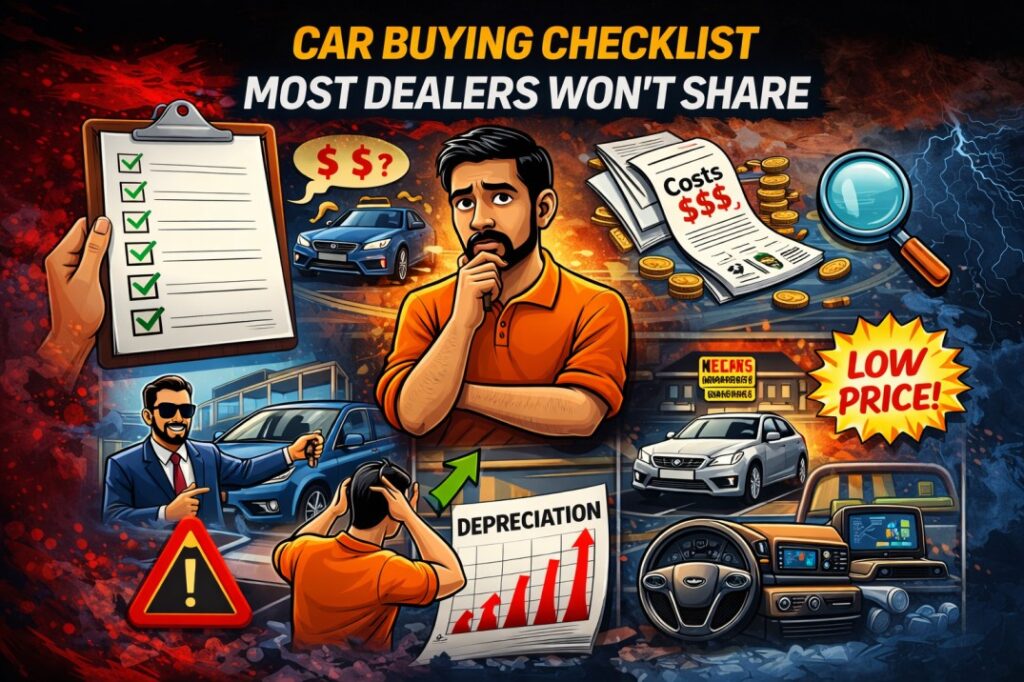
Car buying today is not just about choosing a model.
You are dealing with:
- Multiple variants
- Add-ons and accessories
- Insurance bundles
- Financing options
Each of these can affect your total cost and ownership experience.
If you want a broader understanding of the buying process, you can read our detailed used car buying guide for 2025 (https://carinsighthub.com/the-complete-used-car-buying-guide-for-2025/).
The Hidden Car Buying Checklist (What Dealers Don’t Emphasise)
1. Always Check the Manufacturing Date
This is one of the most ignored points.
Dealers may offer:
- Big discounts
- “Limited period offers”
But sometimes the car is:
- 3–6 months old
- From old stock
Why it matters:
- Lower resale value
- Possible battery and tyre ageing
👉 Always check:
- VIN number
- Manufacturing month and year
2. Don’t Buy Accessories From Dealership Blindly
Dealers push:
- Seat covers
- Floor mats
- Chrome kits
Reality:
- Prices are 2x–3x higher than market
- Quality may not be superior
Smart move:
- Buy essential items only
- Compare prices outside
3. Insurance Is Negotiable (Big Time)
Most buyers accept dealer insurance.
But:
- Dealer commission is high
- Premium is inflated
What you should do:
- Compare online quotes
- Ask dealer to match price
You can understand this better in our guide on how car insurance works in India (https://carinsighthub.com/how-car-insurance-works-in-india-simple-guide-for-beginners/).
4. Don’t Choose Variant Based on Features Alone
Showrooms highlight:
- Touchscreen
- Sunroof
- Alloy wheels
But ignore:
- Safety features
- Driving comfort
- Long-term usability
Real regret:
“I paid extra for features I rarely use.”
5. Test Drive Properly (Not Just 10 Minutes)
Most test drives are:
- Short
- On smooth roads
What you should do:
- Drive in traffic
- Test low-speed driving
- Check braking and suspension
6. Understand Real Maintenance Cost
Dealers rarely discuss:
- Service cost
- Spare part pricing
Why it matters:
- A cheap car can become expensive later
Check our detailed car maintenance cost guide in India (https://carinsighthub.com/car-maintenance-cost-guide-india-2025-model-wise/) before deciding.
7. Check Service Network in Your Area
Before buying, verify:
- Service centres near your home
- Customer feedback
A good car with poor service support becomes frustrating.
8. Don’t Fall for “Limited Time Offers”
Common tactics:
- “Offer valid till today”
- “Last piece available”
Reality:
- Offers keep coming
- Pressure is artificial
Take your time.
9. Loan Offers Are Not Always the Best
Dealer-arranged loans:
- Higher interest rates
- Hidden charges
Smart move:
- Compare bank/NBFC offers
- Negotiate interest rate
10. Always Do Pre-Delivery Inspection (PDI)
Never skip this.
Check:
- Scratches
- Panel gaps
- Electronics
- Tyres
Real mistake:
Many buyers skip PDI and later find issues.
Key Benefits of Following This Checklist
- Save ₹20,000–₹1 lakh easily
- Avoid wrong purchase decisions
- Get better value for money
- Reduce long-term ownership stress
- Improve resale value
Step-by-Step Smart Buying Process
Step 1: Finalise Car Based on Usage
Don’t choose based on:
- Looks
- Trends
Choose based on:
- Daily needs
Step 2: Fix Budget With Buffer
Include:
- Insurance
- Accessories
- Maintenance
Step 3: Compare Multiple Dealers
- Get quotes from 2–3 dealers
- Use one quote to negotiate another
Step 4: Negotiate Smartly
You can negotiate:
- Insurance
- Accessories
- Handling charges
Step 5: Inspect Before Delivery
Never skip PDI.
Comparison Table: Smart Buyer vs Dealer-Driven Buyer
| Feature | Smart Buyer | Dealer-Driven Buyer |
|---|---|---|
| Decision | Research-based | Influenced |
| Insurance | Compared | Dealer default |
| Accessories | Limited | Overpriced |
| Test drive | Detailed | Quick |
| Cost control | High | Low |
Real-Life Example (India Case Study)
Neha from Hyderabad booked a compact SUV.
What happened:
- Accepted dealer insurance
- Bought full accessory package
- Skipped price comparison
Extra cost paid: ₹65,000+
Later she realised:
- Same insurance was cheaper online
- Accessories were overpriced
Her regret:
“I trusted everything the dealer suggested.”
Common Mistakes to Avoid
- Not checking manufacturing date
- Accepting dealer insurance blindly
- Overpaying for accessories
- Skipping PDI
- Rushing decision
You can also read our article on things every car owner should understand but don’t for deeper clarity:
Expert Tips (From Real Buyer Experiences)
- Always negotiate — everything is flexible
- Don’t rush under pressure
- Compare before paying
- Focus on long-term ownership
- Trust research, not sales pitch
If you are still planning, go through our car buying guide that actually saves money in India (https://carinsighthub.com/read-this-before-buying-your-next-car-in-india-a-practical-guide-that-actually-saves-you-money/).
Pros and Cons of Being a Smart Buyer
| Pros | Cons |
|---|---|
| Saves money | Takes more time |
| Better decisions | Requires effort |
| Lower regret | Needs patience |
| Strong negotiation | More research |
Frequently Asked Questions (FAQs)
1. Is it okay to buy insurance from dealer?
Yes, but only after comparing prices and negotiating.
2. What is PDI and why is it important?
Pre-Delivery Inspection ensures the car has no defects before delivery.
3. Can I negotiate car price in India?
Yes, especially on insurance, accessories, and discounts.
4. Should I buy accessories from dealer?
Only essential ones. Others are cheaper outside.
5. How do I check car manufacturing date?
Use VIN number available on the car.
6. Are dealer loan offers good?
Not always. Compare with banks and NBFCs.
7. What is the biggest mistake buyers make?
Trusting dealer advice without verification.
Conclusion
Buying a car is not just about choosing a model — it’s about making a series of smart decisions.
Dealers will guide you, but they won’t always tell you everything. That’s your responsibility.
If you follow this checklist:
- You’ll save money
- Avoid unnecessary expenses
- Make a confident purchase
In India, where buying a car is a major financial step, awareness is your biggest advantage.
Don’t just buy a car — buy it smart.
References
- Government of India Automobile Portal: https://heavyindustries.gov.in
- NITI Aayog Mobility Reports: https://www.niti.gov.in
- SIAM Reports: https://www.siam.in
- Economic Times Auto: https://auto.economictimes.indiatimes.com
- Investopedia Automobile Industry Analysis: https://www.investopedia.com/articles/investing/090915/automobile-industry.asp
