Introduction
Buying a car in India is a big decision. For many people, it’s the second most expensive purchase after a house. Naturally, buyers spend weeks comparing models, watching YouTube reviews, and visiting showrooms.
But here’s the uncomfortable truth — most car buyers still make mistakes they regret later.
Not because they didn’t research enough, but because they focused on the wrong things.
They compare:
- Mileage
- Features
- Price
But ignore:
- Real-life usage
- Long-term costs
- Driving comfort
- Maintenance reality
And that’s where regret starts.
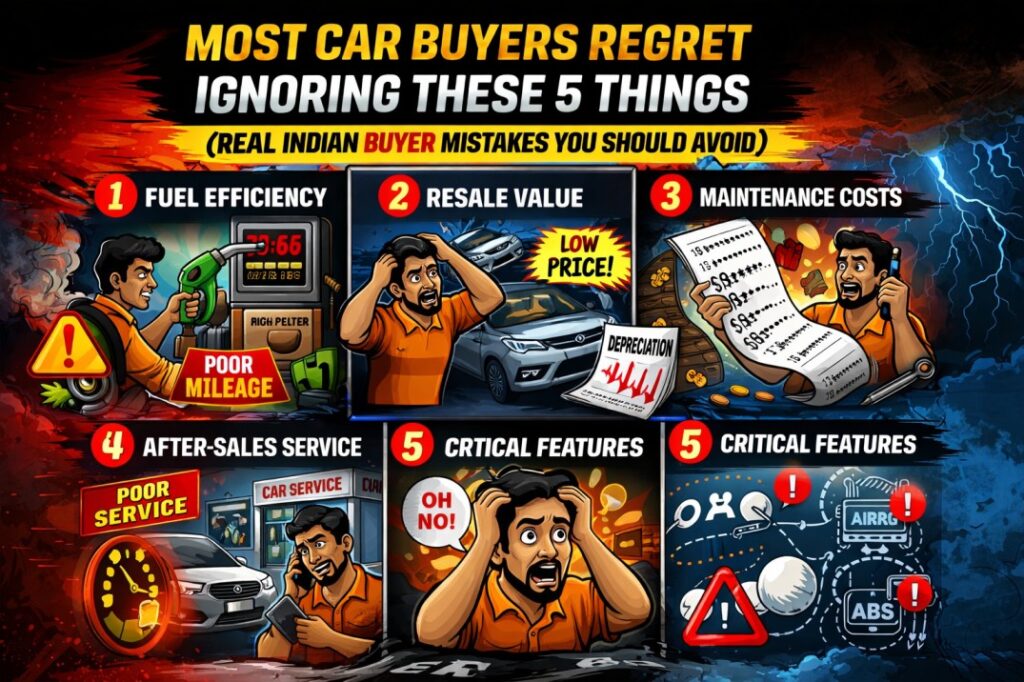
In this article, I’ll walk you through 5 critical things most Indian buyers ignore, backed by real ownership experiences. If you understand these before buying, you won’t just save money — you’ll avoid years of frustration.
Understanding the Problem: Why Buyers Regret Later
Most buyers don’t make “bad decisions” — they make incomplete decisions.
Showrooms highlight:
- Features
- Discounts
- EMI offers
But they don’t talk about:
- Daily driving experience
- Traffic comfort
- Maintenance headaches
If you want to understand the full buying process properly, go through our detailed used car buying guide for 2025 (https://carinsighthub.com/the-complete-used-car-buying-guide-for-2025/).
The 5 Things Most Buyers Ignore (And Regret Later)
1. Real-Life Driving Conditions (Not Test Drive Experience)
This is the biggest mistake.
Test drives are misleading because:
- Roads are empty
- Time is short
- You’re focused, not relaxed
But your daily driving includes:
- Traffic jams
- Bad roads
- Slow crawling
Real regret:
“Car felt smooth in showroom, but very tiring in daily traffic.”
For example:
- Manual cars feel fine in test drive
- But become exhausting in city traffic
2. Total Ownership Cost (Not Just Car Price)
Most buyers focus only on:
- On-road price
- EMI
But ignore:
- Fuel cost
- Service cost
- Insurance
- Repairs
Real regret:
“Car was affordable, but running cost is too high.”
You can understand this better in our guide on car maintenance cost in India model-wise (https://carinsighthub.com/car-maintenance-cost-guide-india-2025-model-wise/).
3. Choosing the Wrong Type of Car
Many buyers choose based on:
- Looks
- Trends
- Advice from friends
Instead of:
- Their actual usage
Examples:
- Buying SUV for city use
- Buying diesel for low running
- Choosing manual for heavy traffic
Real regret:
“Car doesn’t suit my daily needs.”
Also read our comparison on SUV vs sedan which makes sense in India today (https://carinsighthub.com/suv-vs-sedan-which-one-actually-makes-sense-in-india-today-honest-2026-guide/).
4. Ignoring Driving Comfort
Comfort is underrated during buying.
Buyers focus on:
- Features
- Touchscreen size
- Sunroof
But ignore:
- Seat comfort
- Driving position
- Ease in traffic
Real regret:
“Car has features, but driving feels tiring.”
This is especially true for:
- Long commuters
- City drivers
5. Not Understanding Maintenance Reality
Many buyers assume:
“Servicing will be normal”
But reality varies by brand and type.
Issues include:
- Expensive spare parts
- Limited service centres
- High labour charges
Real regret:
“Maintenance is too expensive.”
You should always understand basics like fluids and servicing from our guide on car maintenance tips for fluids and filters (https://carinsighthub.com/car-maintenance-tips-fluids-and-filters/).
Key Benefits of Avoiding These Mistakes
If you consider these 5 factors before buying, you will get:
- Better driving experience
- Lower long-term cost
- Less regret after purchase
- Higher resale value
- Stress-free ownership
Step-by-Step Guide: Smart Car Buying Approach
Step 1: Define Your Usage Clearly
Ask yourself:
- City or highway?
- Daily or occasional?
- Short or long drives?
Step 2: Set a Realistic Budget
Include:
- Car price
- Insurance
- Maintenance
Step 3: Test Drive in Real Conditions
- Drive in traffic
- Try bad roads
- Check comfort
Step 4: Research Ownership Experience
Don’t just watch reviews.
Talk to:
- Existing owners
- Local mechanics
Step 5: Think Long-Term
Ask:
- Will this car suit me after 3 years?
Comparison Table: Smart Buyer vs Common Buyer
| Feature | Smart Buyer | Common Buyer |
|---|---|---|
| Focus | Usage | Features |
| Test drive | Real conditions | Short drive |
| Budget | Total cost | Only car price |
| Research | Ownership experience | Online reviews |
| Decision | Practical | Emotional |
Real-Life Example (India Case Study)
Vikram from Pune bought a diesel SUV because:
- Friends recommended it
- Looked premium
But his usage:
- Daily city commute (10 km)
After 1 year:
- Poor mileage in city
- Higher maintenance cost
- Difficult parking
His regret:
“I bought what looked good, not what I needed.”
Common Mistakes to Avoid
- Buying based on looks only
- Ignoring daily usage
- Not checking maintenance cost
- Choosing wrong fuel type
- Overstretching budget
Also read our article on things every car owner should understand but don’t for deeper insights:
Expert Tips (From Real Indian Ownership Trends)
- Always prioritise usage over features
- Don’t blindly follow trends
- Comfort matters more than features
- Check service network in your city
- Think resale from day one
Pros and Cons of Smart Buying Approach
| Pros | Cons |
|---|---|
| Better long-term satisfaction | Takes more time |
| Lower cost of ownership | Requires research |
| Fewer regrets | Needs patience |
| Practical decision | Less emotional buying |
Frequently Asked Questions (FAQs)
1. Why do most car buyers regret their purchase?
Because they focus on features and price instead of real usage and long-term cost.
2. Is test drive enough to decide?
No, real driving conditions are very different.
3. Should I prioritise mileage or comfort?
Depends on usage, but comfort is more important for daily driving.
4. How important is maintenance cost?
Very important. It affects long-term ownership experience.
5. Is SUV always better than sedan?
No, it depends on your usage and driving conditions.
6. Can I rely on online reviews?
Use them as reference, but also check real owner feedback.
7. What is the biggest mistake buyers make?
Ignoring their actual daily driving needs.
Conclusion
Buying a car is not just about choosing the best model — it’s about choosing the right car for your life.
Most regrets don’t come from bad cars. They come from:
- Wrong expectations
- Poor planning
- Ignoring practical factors
If you avoid these 5 mistakes, you won’t just buy a car — you’ll make a decision you’ll be happy with for years.
In India, where driving conditions are challenging and costs are rising, smart buying is not optional anymore — it’s necessary.
References
- Government of India Automobile Portal: https://heavyindustries.gov.in
- NITI Aayog Mobility Reports: https://www.niti.gov.in
- SIAM Reports: https://www.siam.in
- Economic Times Auto: https://auto.economictimes.indiatimes.com
- Investopedia Automobile Industry Analysis: https://www.investopedia.com/articles/investing/090915/automobile-industry.asp
From my own personal experience
"I’ve personally experienced this while regularly driving my car in heavy city traffic. At one point, I postponed a routine service by a few thousand kilometres, thinking it wouldn’t have much impact. However, within a few weeks, I started noticing that the engine was running less smoothly, and the fuel efficiency dropped noticeably.”
“ I also saw a similar issue with a friend’s car, where delaying basic maintenance led to reduced performance over time. These experiences made it clear to me that even small delays in regular servicing can affect a car’s long-term performance and increase overall running costs.
Research Sources
- Society of Indian Automobile Manufacturers (SIAM)
- NITI Aayog Mobility Reports
- Economic Times Auto
- Government of India EV Portal (e-Amrit)
- Investopedia – Automobile Industry
Disclaimer: This article is published for general informational purposes based on research, observations, and owner experiences. It should not be considered professional, technical, or legal advice. Vehicle specifications, costs, and procedures may vary by model, location, and time. Readers are advised to verify details with official sources or qualified professionals before making decisions.
