Introduction
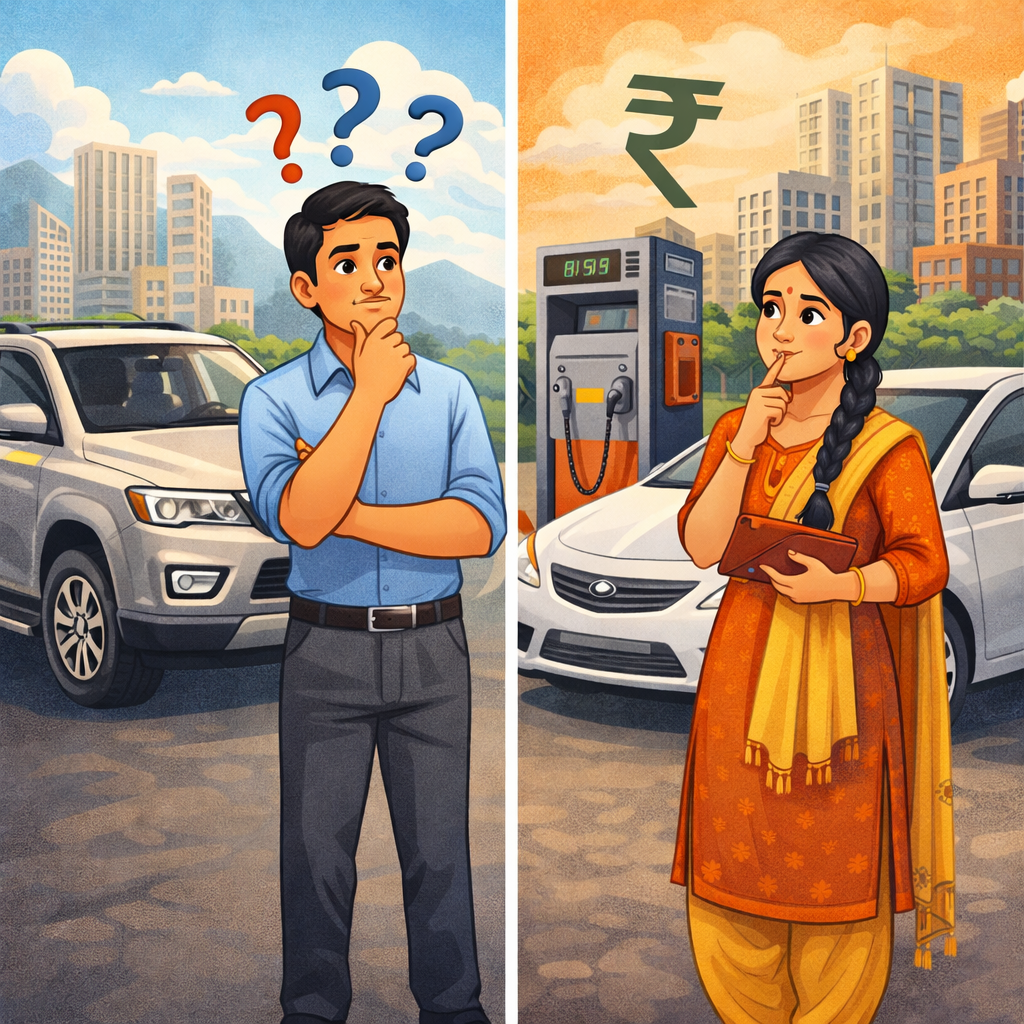
If you’re planning to buy a car in India today, you’ve probably faced this question — SUV or sedan?
Walk into any showroom and you’ll notice one thing immediately: SUVs are everywhere. From compact SUVs under ₹10 lakh to premium ones above ₹30 lakh, the market is clearly shifting.
But does that mean SUVs are automatically the better choice?
Not really.
The truth is, many buyers are choosing SUVs because of trend, not because it actually suits their usage. And after a year or two, some of them quietly regret it.
In this article, we’ll go beyond hype and break down what really matters in Indian conditions — traffic, roads, fuel cost, comfort, and long-term ownership.
By the end, you’ll know exactly which one makes sense for your lifestyle.
Understanding the Core Difference
Let’s simplify it.
- Sedan = Lower height, better aerodynamics, more stable
- SUV = Higher ground clearance, taller stance, commanding view
But in India, the difference is not just design — it affects your daily experience.
If you want to understand how these vehicles are built and how they perform mechanically, you can check our guide on car engine and powertrain explained in simple terms (https://carinsighthub.com/car-engine-and-powertrain-the-complete-guide/).
Why SUVs Are Dominating the Market Today
There’s a reason SUVs are popular.
What buyers like:
- High ground clearance for bad roads
- Better road presence
- Easier entry and exit
- Confidence on speed breakers and potholes
In cities with poor road conditions or frequent waterlogging, SUVs feel more practical.
Where Sedans Still Win (But People Ignore This)
Sedans are not outdated — they are just underrated.
Real advantages:
- Better ride quality on highways
- More stable at high speeds
- Better fuel efficiency
- Comfortable seating for long drives
If you drive long distances or highways regularly, sedans still make a lot of sense.
The Reality Most Buyers Don’t Think About
1. City Driving vs Highway Driving
- City traffic → SUV feels easier due to height
- Highway driving → Sedan feels smoother and more stable
2. Parking and Space Issues
SUVs are:
- Bigger
- Harder to park in tight spaces
Sedans are easier in:
- Apartments
- Narrow streets
3. Fuel Cost Difference
SUVs:
- Heavier
- Consume more fuel
Sedans:
- More efficient
Over 5 years, this difference becomes significant.
4. Comfort vs “Feeling of Control”
SUV gives:
- Commanding view
Sedan gives:
- Better driving comfort
Many buyers confuse these two.
Step-by-Step Guide: Which One Should You Choose?
Step 1: Check Your Daily Usage
- Mostly city driving → SUV
- Mostly highways → Sedan
Step 2: Look at Your Road Conditions
- Bad roads / speed breakers → SUV
- Smooth roads → Sedan
Step 3: Consider Parking Situation
- Tight parking → Sedan
- Spacious parking → SUV
Step 4: Think About Long-Term Cost
- SUV → higher fuel + maintenance
- Sedan → more economical
Step 5: Test Drive Both Properly
Don’t decide based on:
- Looks
- Trend
Drive both in real conditions.
Comparison Table: SUV vs Sedan (India-Focused)
| Feature | SUV | Sedan |
|---|---|---|
| Ground clearance | High | Low |
| Road presence | Strong | Moderate |
| Fuel efficiency | Lower | Better |
| Highway stability | Good | Excellent |
| City driving comfort | Good | Moderate |
| Parking ease | Difficult | Easy |
| Ride comfort (long trips) | Good | Excellent |
Real-Life Example (Indian Case Study)
Karthik from Chennai bought a compact SUV.
Why:
- High ground clearance
- Better road presence
After 2 years:
- Slightly higher fuel cost
- Harder parking in apartment
But:
- No issues on bad roads
- Comfortable city driving
Meanwhile, his friend chose a sedan:
- Better mileage
- More comfortable long drives
- But struggled on bad roads
Conclusion:
Both cars were good — but suited different needs.
Common Mistakes to Avoid
- Choosing SUV just because it’s trending
- Ignoring your actual driving usage
- Not considering parking space
- Focusing only on looks
- Skipping proper test drive
You can also read our guide on things every car owner should understand but don’t for deeper clarity:
Expert Tips (From Real Indian Ownership Trends)
- Don’t buy SUV just for “road presence”
- If you drive highways often, sedan is underrated
- For bad roads, SUV is practical
- Always prioritise usage over trend
- Think 5 years ahead
If you’re planning your purchase, check our car buying guide that actually saves money in India (https://carinsighthub.com/read-this-before-buying-your-next-car-in-india-a-practical-guide-that-actually-saves-you-money/).
Pros and Cons Table
| Pros of SUV | Cons of SUV |
|---|---|
| Better ground clearance | Lower mileage |
| Strong road presence | Harder parking |
| Suitable for bad roads | Higher cost |
| Pros of Sedan | Cons of Sedan |
|---|---|
| Better comfort | Low ground clearance |
| Higher mileage | Less road presence |
| Stable driving | Not ideal for bad roads |
Frequently Asked Questions (FAQs)
1. Which is better for Indian roads — SUV or sedan?
Depends on road conditions. Bad roads → SUV, good roads → sedan.
2. Are SUVs safer than sedans?
Not necessarily. Safety depends on build quality, not just type.
3. Which is better for long drives?
Sedans are generally more comfortable for long highway drives.
4. Do SUVs consume more fuel?
Yes, due to higher weight and size.
5. Is sedan outdated in India?
No, but demand has reduced due to SUV popularity.
6. Which is easier to drive in city traffic?
SUV gives better visibility, but sedan is easier to park.
7. What should I choose as a first car?
Choose based on usage, not trend.
Conclusion
SUV vs sedan is not about which is better — it’s about which is right for you.
SUVs make sense if:
- You face bad roads daily
- You want higher seating position
- You prioritise practicality
Sedans make sense if:
- You drive highways often
- You want better comfort and efficiency
- You prefer smooth driving
In today’s Indian market, SUVs may dominate sales, but sedans still offer unmatched comfort and efficiency for the right user.
So don’t follow the trend blindly.
Choose the car that fits your life — not the one that looks best on the road.
References
- Government of India Automobile Portal: https://heavyindustries.gov.in
- NITI Aayog Mobility Reports: https://www.niti.gov.in
- SIAM Reports: https://www.siam.in
- Economic Times Auto: https://auto.economictimes.indiatimes.com
- Investopedia Automobile Industry Analysis: https://www.investopedia.com/articles/investing/090915/automobile-industry.asp
