
Car Maintenance Tips for Tires and Wheels (Indian Driving Guide)
When we talk about car maintenance in India, most people think about engine oil, servicing, or mileage. But the real heroes quietly doing all the hard work are your tyres and wheels. They carry the entire weight of your car, handle potholes, survive broken roads, and deal with heat, rain, mud, and dust every single day.
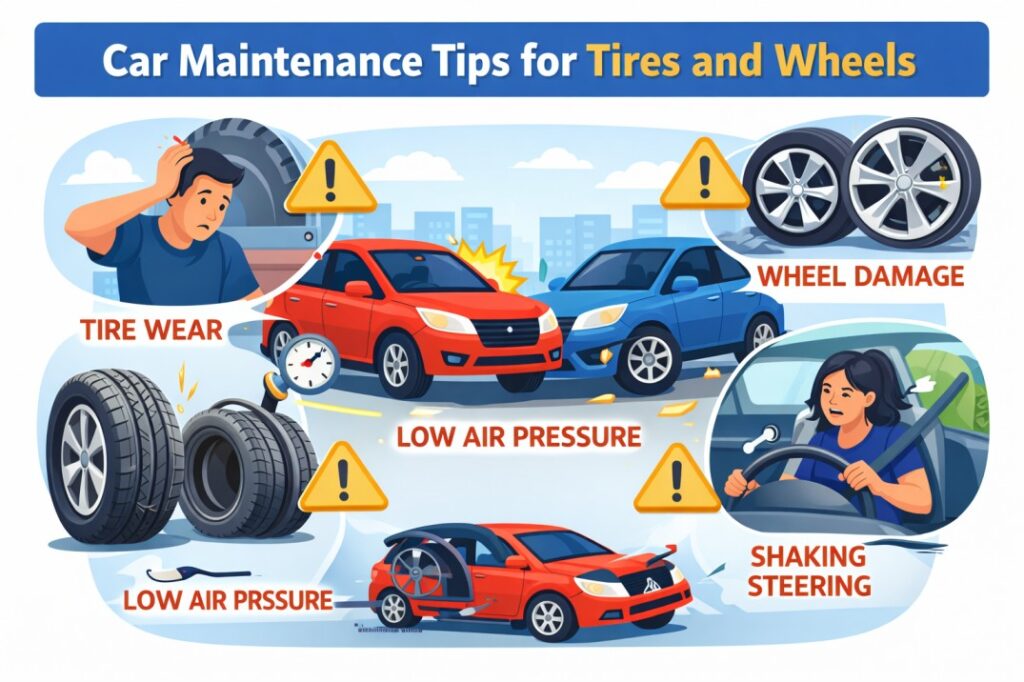
Still, tyre care is often ignored until a puncture happens on a highway at night. That’s when we realise how important they are.
In this detailed guide, let’s understand how to properly maintain your car’s tyres and wheels in Indian conditions — practical, simple, and realistic advice that actually works.
Why Tyre and Wheel Maintenance Matters in India
Indian roads are unpredictable. One stretch is smooth highway, next is a patch of broken concrete. Add speed breakers without markings, deep monsoon potholes, and heavy traffic — tyres take serious abuse.
Proper maintenance helps you:
- Improve fuel efficiency
- Increase tyre life
- Avoid sudden blowouts
- Maintain better braking control
- Ensure safer highway driving
- Reduce long-term repair costs
If you’re serious about keeping your vehicle reliable, tyre care should be part of your regular routine, just like following a proper car maintenance checklist monthly yearly guide carinsighthub sitemap.
1. Maintain Correct Tyre Pressure (Most Ignored Habit)
Driving with incorrect tyre pressure is one of the biggest mistakes Indian car owners make.
What happens if pressure is low?
- Poor mileage
- Uneven tyre wear
- Heavy steering
- Risk of sidewall damage
What happens if pressure is too high?
- Reduced grip
- Hard ride quality
- Higher risk of burst on hot highways
What you should do:
- Check tyre pressure every 2–3 weeks.
- Always check when tyres are cold (morning is best).
- Follow manufacturer recommended PSI (usually mentioned on driver-side door frame).
- Don’t rely blindly on petrol pump gauges — if possible, keep a small digital tyre inflator at home.
If you want a more detailed explanation, read this guide on how to check and maintain proper tire pressure carinsighthub sitemap.
2. Wheel Alignment – Don’t Ignore These Signs
If your car pulls slightly to one side while driving straight, your wheel alignment is likely disturbed.
In India, alignment issues are common because of:
- Potholes
- High speed breaker impact
- Hitting road dividers
- Rough village roads
Signs You Need Alignment:
- Steering not straight
- Car drifting left or right
- Uneven tyre wear
- Steering vibration
When to do it?
- Every 8,000–10,000 km
- After hitting a major pothole
- After suspension repair
Wheel alignment also directly affects braking and suspension performance. If you want to understand how tyres, suspension and brakes are connected, you can read understanding car brakes and suspension carinsighthub sitemap.
3. Tyre Rotation – Increase Life by 20–30%
Front tyres wear faster in most Indian cars (especially front-wheel drive vehicles). If you never rotate tyres, front ones will finish early while rear tyres still look new.
Ideal Rotation Interval:
- Every 8,000 to 10,000 km
Why it helps:
- Even wear
- Better balance
- Longer tyre life
- Improved ride comfort
Most service centres include rotation in periodic servicing — but always confirm.
4. Check Tyre Tread Depth Regularly
Tread is what gives your tyre grip — especially during monsoon.
Minimum Safe Tread:
1.6 mm (legal limit), but in Indian monsoon conditions, replace earlier if grip feels low.
How to check:
- Look for wear indicator bars inside tyre grooves.
- Use coin method.
- Check for uneven patterns.
Driving on bald tyres during rain can cause hydroplaning — where your car temporarily loses contact with the road. That’s extremely risky on highways.
If you drive during monsoons frequently, also go through this seasonal car care for summer or monsoon carinsighthub sitemap guide for better safety preparation.
5. Don’t Overload Your Car
Indian families often overload cars during trips — full passengers plus luggage on roof carriers.
Excess weight:
- Increases tyre heat
- Reduces tyre life
- Increases risk of burst
- Affects braking
Always check your vehicle’s load rating. Overloading also impacts mileage and suspension.
6. Inspect Wheels for Damage
Tyres are not the only concern. Wheels (rims) also get damaged.
Common Wheel Issues:
- Bent alloy rims
- Cracks from potholes
- Rust in steel wheels
- Air leakage from rim damage
If you feel continuous vibration even after balancing, get wheels inspected.
7. Wheel Balancing – Smooth Driving Matters
If your steering vibrates at 80–100 km/h, balancing is likely required.
Balancing ensures:
- Smooth ride
- Even tyre wear
- Reduced strain on suspension
Do balancing:
- Every 10,000 km
- After tyre replacement
- If vibration starts
Small metal weights are attached to correct imbalance — simple but very effective process.
8. Avoid Cheap, Unknown Tyres
Tyres are not the place to save money blindly. Cheap unknown brands may compromise safety.
Instead:
- Choose tyres suited for Indian road conditions.
- Check manufacturing date (not older than 6 months ideally).
- Verify load and speed rating.
For better guidance, check this detailed list of best car tyres for Indian roads 2025 carinsighthub sitemap before buying.
9. Keep an Eye on Sidewall Damage
Sidewall bulges or cracks are dangerous.
If you see:
- Bubble-like swelling
- Deep cuts
- Visible threads
Replace tyre immediately. Sidewall damage cannot be repaired safely.
10. Maintain Spare Tyre Properly
Most people forget the spare tyre completely.
Check:
- Pressure every month
- Condition during service
- Jack and toolkit availability
You don’t want a flat spare tyre during an emergency.
11. Seasonal Care for Indian Conditions
Summer:
- Heat increases air pressure. Check more frequently.
- Avoid overinflation.
- Park in shade when possible.
Monsoon:
- Ensure good tread depth.
- Drive slowly through waterlogged roads.
- Clean mud stuck inside wheel arches.
Rural/Dusty Areas:
- Wash wheels regularly.
- Inspect for stone cuts.
12. Simple Monthly Tyre Care Routine
Here’s a practical habit you can follow:
Every Month:
- Check tyre pressure
- Inspect tread
- Look for cuts or nails
- Check spare tyre
Every 6 Months:
- Alignment
- Balancing
- Rotation
This small effort can increase tyre life significantly and keep your driving stress-free.
Final Thoughts
Tyres and wheels are literally the foundation of your car’s safety. Engine power doesn’t matter if your tyres don’t grip properly. Expensive features don’t matter if braking distance increases because of worn tread.
In Indian driving conditions, tyre maintenance is not optional — it’s essential.
A small monthly check can save you thousands of rupees and possibly prevent accidents. Whether you drive daily in city traffic or take long highway trips, giving proper attention to your tyres will always pay off.
Make it a habit. Not after a puncture. Not after a warning sign. But before something goes wrong.
Safe driving always starts from the ground up.
From my own personal experience
“I’ve personally noticed this while using my own car regularly in heavy city traffic. There was a time when I delayed a basic service by a few thousand kilometres, assuming it wouldn’t make much difference. Within weeks, the engine felt slightly rough and fuel efficiency dropped more than expected. A similar situation happened with a friend’s car as well, which clearly shows how small maintenance delays can impact long-term performance.”
References
- Society of Indian Automobile Manufacturers (SIAM)
- NITI Aayog Mobility Reports
- Economic Times Auto
- Government of India EV Portal (e-Amrit)
- Investopedia – Automobile Industry
Disclaimer: This article is published for general informational purposes based on research, observations, and owner experiences. It should not be considered professional, technical, or legal advice. Vehicle specifications, costs, and procedures may vary by model, location, and time. Readers are advised to verify details with official sources or qualified professionals before making decisions.
