Introduction
When someone buys a car in India, the focus is usually on mileage, resale value, or features. Very few people truly understand what powers the vehicle every single day — the engine and the powertrain.
These two systems are responsible for converting fuel into motion and delivering that motion to your wheels. If either of them develops a problem, repair costs can be significant. In 2025, with rising spare part prices and advanced technology in cars, preventive understanding is more important than ever.
This guide explains the engine and powertrain in simple terms, with practical Indian driving insights to help you maintain your vehicle wisely.
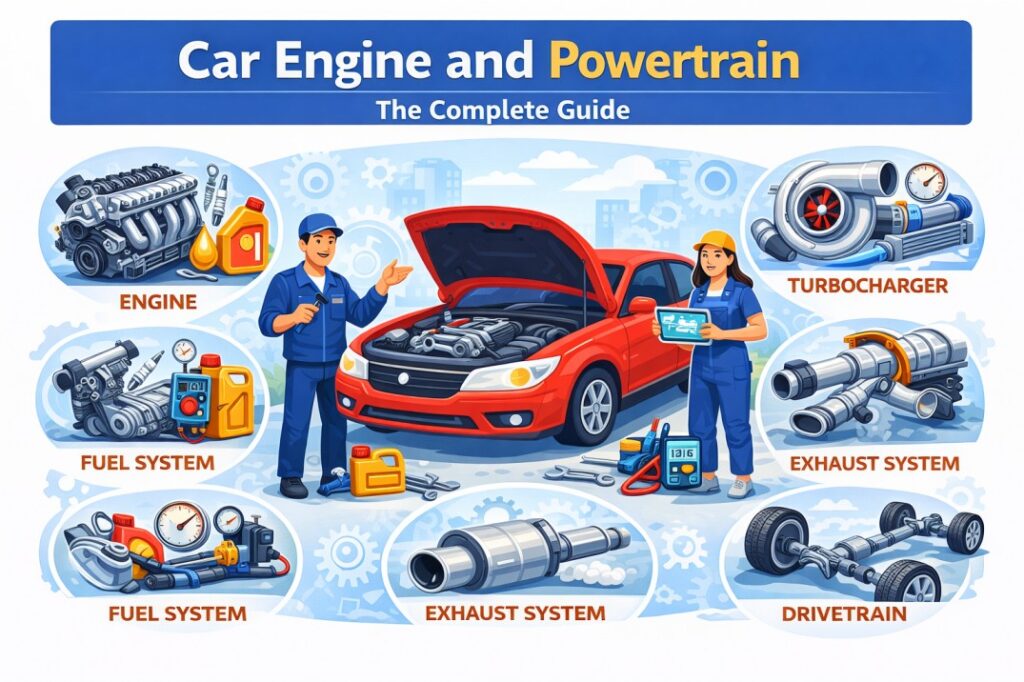
What Is a Car Engine?
The engine is the core mechanical unit that generates power by burning fuel.
In simple words:
Fuel burns → energy is created → pistons move → crankshaft rotates → car moves.
Most cars in India run on:
- Petrol engines
- Diesel engines
- Turbocharged petrol engines
- Hybrid systems
Electric vehicles use motors instead of traditional engines, but the concept of power delivery remains similar.
If you want a deeper mechanical breakdown of engine components, you can explore car parts explained functions for better understanding of how different systems connect.
Main Components of an Engine
Even if you are not technically inclined, knowing basic parts helps identify issues early.
Cylinder Block
The main structure where combustion happens.
Pistons
Move up and down, compressing fuel and creating energy.
Crankshaft
Converts piston motion into rotation.
Camshaft & Valves
Control airflow and exhaust gases.
Spark Plugs (Petrol Engines)
Ignite fuel-air mixture.
Each part works precisely. Even minor neglect can lead to performance drop.
Petrol vs Diesel Engines in India
Choosing between petrol and diesel depends on usage.
Petrol Engines
- Smooth and quieter
- Lower initial cost
- Ideal for city driving
Diesel Engines
- Higher torque
- Better highway mileage
- Suitable for long-distance users
If you’re unsure which suits your needs, read diesel vs petrol cars which one should you buy in 2025 for a practical comparison.
What Is the Powertrain?
The powertrain includes all components that transfer engine power to the wheels.
It consists of:
- Engine
- Transmission (gearbox)
- Driveshaft
- Differential
- Axles
Think of it this way — the engine creates power, and the powertrain delivers it efficiently.
Types of Transmission Systems in 2025
Manual Transmission
Affordable, reliable, and common in budget cars.
Automatic Transmission
Comfortable in city traffic.
AMT
Budget-friendly automatic option.
CVT
Smooth acceleration, good for urban use.
DCT
Quick gear shifts, performance-oriented.
Automatic transmissions are growing in popularity, but poor driving habits can damage them. If you drive automatic, avoid common mistakes explained in 7 car driving habits that damage your automatic gearbox.
Real-Life Example: Ignoring Engine Oil
A driver in Mumbai delayed oil changes for over a year because the car was “running fine.” Eventually, internal friction caused engine knocking. Repair cost crossed ₹70,000.
Regular oil change costs a fraction of that.
Skipping scheduled servicing may look like short-term savings but becomes expensive later. You can refer to what happens if you skip car servicing real effects to understand long-term impact.
Common Engine Problems in Indian Conditions
Indian traffic, heat, dust, and varying fuel quality create additional stress.
Overheating
Caused by coolant leakage or radiator issues.
Engine Knocking
Often due to poor fuel quality or delayed oil change.
Rough Idling
Possible throttle body or injector issue.
Oil Leakage
Never ignore oil stains under your parked car.
Fuel quality also plays a role. If you’ve noticed performance drop after refuelling, read how Indian fuel quality affects engine life for better clarity.
How Driving Habits Affect Engine Life
Your habits matter more than the brand of car.
Bad habits:
- Hard acceleration immediately after starting
- Riding the clutch
- Sudden braking
- Ignoring warning lights
- Overloading vehicle
Good habits:
- Gentle acceleration
- Regular servicing
- Proper tyre pressure
- Using recommended oil grade
Smooth driving increases both engine and transmission lifespan.
Estimated Repair Costs in 2025 (India)
- Minor engine repair: ₹5,000–₹20,000
- Clutch replacement: ₹8,000–₹25,000
- Turbo repair: ₹20,000–₹60,000
- Automatic gearbox repair: ₹40,000–₹2 lakh
- Major engine overhaul: ₹60,000–₹1.5 lakh
These figures vary by segment, but preventive maintenance is always cheaper.
How to Increase Engine and Powertrain Lifespan
- Follow service schedule strictly.
- Change engine oil on time.
- Maintain coolant levels.
- Avoid aggressive driving.
- Let turbocharged engines idle briefly before switching off.
- Address warning lights immediately.
Small habits make a huge difference over 5–7 years of ownership.
Final Thoughts
The engine and powertrain are the most critical and expensive systems in your car. In Indian conditions, they work harder due to traffic congestion, heat, road quality, and driving patterns.
Understanding how they function helps you:
- Detect issues early
- Avoid unnecessary expenses
- Improve fuel efficiency
- Extend vehicle life
A well-maintained engine can easily cross 2–3 lakh kilometres. A neglected one may struggle much earlier.
Respect the machinery, drive smoothly, and service on time. Your car will reward you with reliability and peace of mind.
FAQs
1. How long does a car engine typically last in India?
With proper maintenance and timely oil changes, most modern engines can last 2–3 lakh kilometres. Driving habits and service quality play a major role.
2. Is automatic transmission more expensive to maintain than manual?
Generally, yes. Automatic gearboxes, especially CVT and DCT units, have higher repair costs. However, proper driving and maintenance reduce major issues.
3. Can poor fuel quality damage the engine?
Yes. Low-quality fuel can cause knocking, injector clogging, and long-term internal wear. Always refuel from reliable petrol pumps and follow recommended fuel type.
From my own personal experience
“I’ve personally noticed this while using my own car regularly in heavy city traffic. There was a time when I delayed a basic service by a few thousand kilometres, assuming it wouldn’t make much difference. Within weeks, the engine felt slightly rough and fuel efficiency dropped more than expected. A similar situation happened with a friend’s car as well, which clearly shows how small maintenance delays can impact long-term performance.”
References
- Society of Indian Automobile Manufacturers (SIAM)
- NITI Aayog Mobility Reports
- Economic Times Auto
- Government of India EV Portal (e-Amrit)
- Investopedia – Automobile Industry
Disclaimer: This article is published for general informational purposes based on research, observations, and owner experiences. It should not be considered professional, technical, or legal advice. Vehicle specifications, costs, and procedures may vary by model, location, and time. Readers are advised to verify details with official sources or qualified professionals before making decisions.
