Confused about car insurance types? This complete Indian guide explains third-party, comprehensive, add-ons, myths, mistakes, FAQs, and how to choose the right car insurance without overpaying.
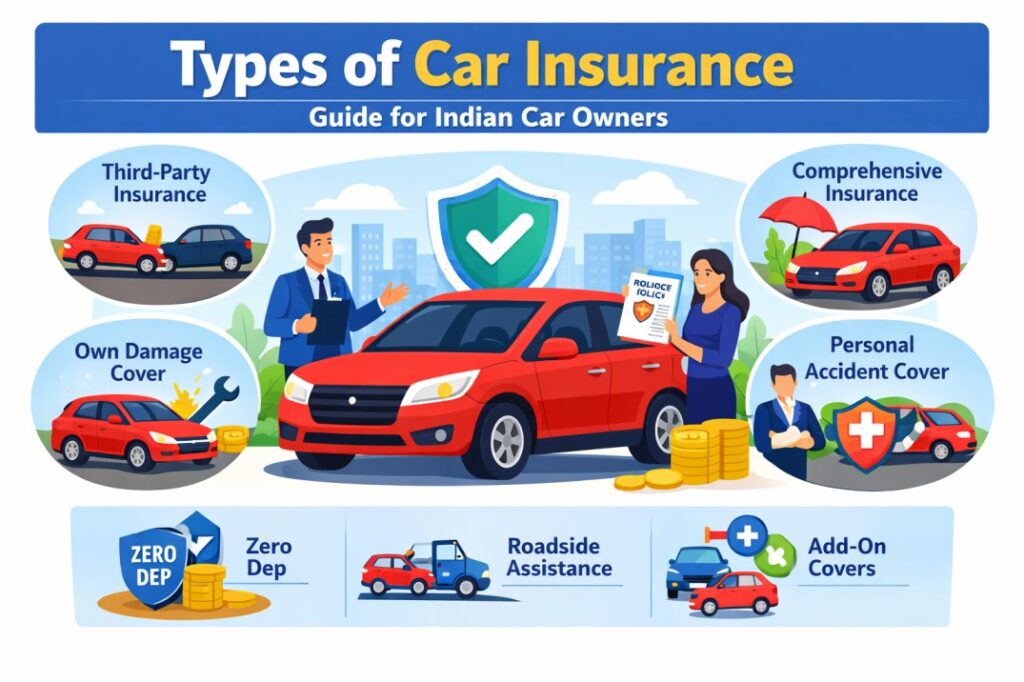
Types of Car Insurance – Complete Guide for Indian Car Owners
Car insurance is mandatory in India.
But understanding car insurance? That’s optional—and most people skip it.
The result?
- Overpaying every year
- Wrong coverage
- Claim disappointments
- Fear-based buying
This guide is written to explain car insurance clearly, in simple Indian context, without jargon or sales pressure.
If you understand this once, you’ll never be confused again.
Why Understanding Car Insurance Matters More Than You Think
Most people treat car insurance like:
“Bas renew kar do, jo bhi ho.”
But car insurance affects:
- Your legal safety
- Your financial risk
- Your peace of mind after accidents
Choosing the wrong type of insurance doesn’t show immediately—but it hurts when something goes wrong.
What Is Car Insurance (In Simple Words)?
Car insurance is a contract where:
- You pay a premium
- The insurance company covers financial losses from:
- Accidents
- Theft
- Natural disasters
- Third-party damage
In India, at least third-party insurance is legally compulsory.
Main Types of Car Insurance in India
There are three primary categories every car owner must understand:
- Third-Party Car Insurance
- Comprehensive Car Insurance
- Standalone Own-Damage Insurance
Let’s break them down simply.
1. Third-Party Car Insurance
What It Is
Third-party insurance covers:
- Injury or death of another person
- Damage to someone else’s vehicle or property
It does not cover damage to your own car.
Why It’s Important
- Mandatory by law (Motor Vehicles Act)
- Protects you from legal and financial liability
What It Does NOT Cover
- Your car repairs
- Theft of your car
- Natural calamity damage
Who Should Choose It
- Very old cars
- Cars with low resale value
- Owners looking for minimum legal compliance
Limitation
Cheap, but risky for your own car.
2. Comprehensive Car Insurance
What It Is
This is the most popular and recommended type of car insurance.
It includes:
- Third-party coverage
- Own-damage coverage
What It Covers
- Accidents
- Theft
- Fire
- Floods, cyclones, earthquakes
- Vandalism
- Damage during transit
Why Most Owners Choose It
- Complete protection
- Peace of mind
- Better resale confidence
Who Should Choose It
- New car owners
- Cars under loan
- Cars under 7–8 years old
This is the safest and most balanced option for most Indian drivers.
👉 Related read:
How Car Insurance Works in India – Simple Guide
3. Standalone Own-Damage Insurance
What It Is
This covers only damage to your own car.
You must already have:
- An active third-party insurance policy
Why It Exists
After 2018, IRDAI allowed buyers to:
- Choose third-party from one insurer
- Choose own-damage from another
Who Should Consider It
- Buyers who want flexibility
- Owners who want to optimise premium
- Those comparing insurers aggressively
This option suits experienced, informed buyers.
Add-On Covers (Optional but Important)
Add-ons increase premium—but can save money during claims.
Common Add-On Covers Explained
Zero Depreciation Cover
- No depreciation deduction on parts
- Best for new cars
- Highly recommended
Engine Protection Cover
- Covers engine damage due to water ingress
- Useful in flood-prone areas
Roadside Assistance
- Towing, battery jump-start, flat tyre help
Return to Invoice
- Pays original invoice value if car is total loss
- Useful in first 2–3 years
Add-ons are optional.
Choose based on usage, not fear.
👉 Helpful guide:
What Is Zero Depreciation Car Insurance – Benefits & Drawbacks
What Is NOT Covered (Policy Exclusions)
Every policy has exclusions. Common ones include:
- Drunk driving
- Driving without valid licence
- Wear and tear
- Mechanical failure
- Consequential damage
Reading exclusions avoids claim shock later.
IDV (Insured Declared Value) – Why It Matters
IDV is the maximum amount insurer pays if your car is stolen or totalled.
Key points:
- Higher IDV = higher premium
- Lower IDV = lower payout
- Correct IDV = market value
Never blindly choose highest or lowest IDV.
Myths vs Reality: Car Insurance in India
| Myth | Reality |
|---|---|
| Cheapest insurance is best | Coverage matters more |
| Dealer insurance is safest | Often most expensive |
| Insurance covers everything | Exclusions exist |
| Small claims don’t matter | They kill NCB |
| Online insurance is risky | Fully legal & regulated |
Common Mistakes Car Owners Make
❌ Buying insurance without comparison
❌ Choosing add-ons blindly
❌ Ignoring policy exclusions
❌ Claiming small repairs unnecessarily
❌ Forgetting No Claim Bonus
These mistakes increase premiums year after year.
👉 Learn how to reduce premium:
Save Money on Car Insurance – Indian Guide
How to Choose the Right Type of Car Insurance
Ask yourself:
- How old is my car?
- Can I afford repair costs myself?
- Is my area flood-prone?
- Is my car under loan?
Simple Recommendation
- New car: Comprehensive + zero depreciation
- Mid-age car: Comprehensive with selective add-ons
- Very old car: Third-party only
FAQs (Frequently Asked Questions)
1. Is third-party insurance enough?
Legally yes, practically no for most cars.
2. Is comprehensive insurance mandatory?
No, but highly recommended.
3. Can I change insurance type at renewal?
Yes, freely.
4. Are add-ons compulsory?
No, they are optional.
5. Does insurance price reduce as car ages?
Yes, if IDV and add-ons are optimised.
6. Can I buy insurance without dealer?
Yes, completely legal.
7. What’s the biggest insurance mistake?
Buying without understanding coverage.
Final Thoughts: Insurance Is Boring—But Ignoring It Is Expensive
Car insurance isn’t exciting.
But choosing the wrong type can cost you years of overpayment or one bad claim experience.
Once you understand:
- Types
- Coverage
- Limitations
Insurance stops being confusing—and starts working for you.
Strong CTA 🚗🛡️
👉 Bookmark this guide for renewal time
👉 Share it with a new car owner
👉 Explore more honest, India-first insurance guides on Car Insight Hub
Because smart insurance isn’t about paying less—
it’s about being protected correctly.
