National EV Vision and Targets
India aims for 30% EV penetration by 2030 across all road vehicles. This goal will lower import dependency, curb air pollution, cut greenhouse emissions, and position India as a global EV manufacturing powerhouse. The roadmap includes:
- National Mission on Electric Mobility (NMEM): Centralized planning for rapid EV adoption and manufacturing
- Targeted reduction in fuel imports and promotion of renewable energy integration
- Alignment with global EV30@30 initiative—30% new vehicle sales as EVs by 2030
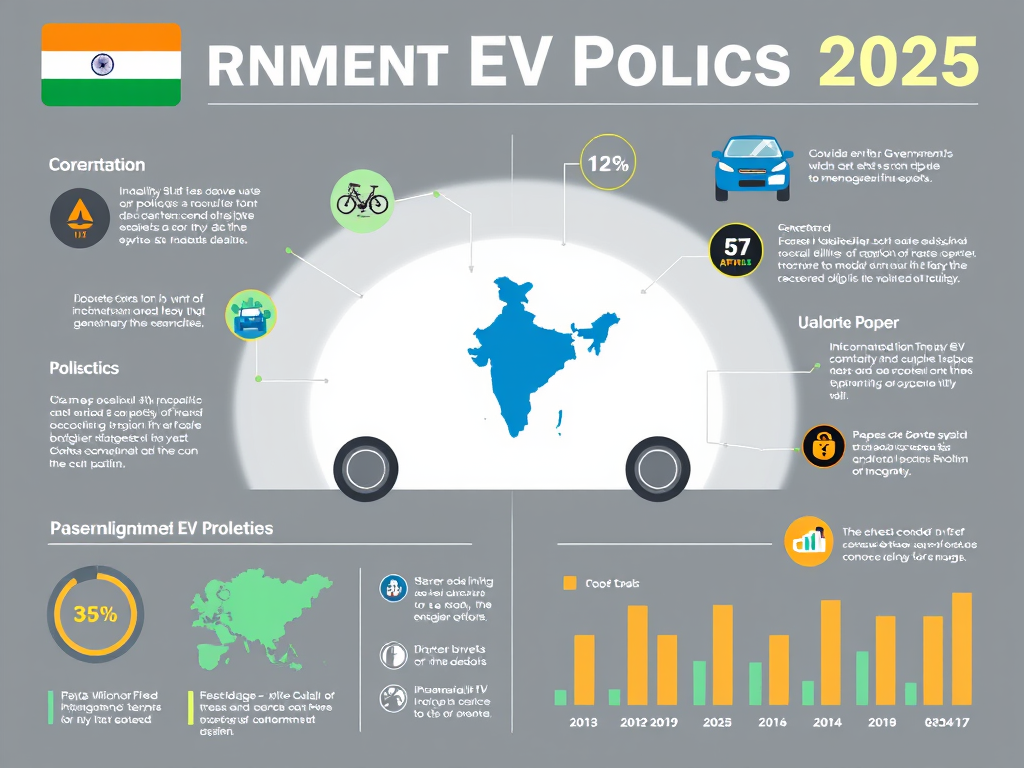
Source: NITI Aayog Electric Vehicles Report, 2025
FAME II and Successor Schemes
FAME II (Faster Adoption and Manufacturing of Hybrid & Electric Vehicles – Phase II)
- Launched: April 2019, extended into 2025 with ₹10,000 crore allocation
- Purpose: Upfront incentives for purchasing EVs and supporting charging infrastructure
- Impact: Subsidized 10 lakh e-2W, 5 lakh e-3W, 55,000 EV cars, and 7,000 buses
- Focus Shift: In 2025, incentives are now streamlined toward electric two- and three-wheelers, e-buses, and commercial EVs, especially for advanced batteries (e.g., lithium-ion)
EMPS 2024 (Electric Mobility Promotion Scheme)
- Replaces FAME II as of April 2024
- Lower subsidies: Flat 15% of ex-factory price on approved models, especially e-2Ws and e-3Ws
- Instant subsidy at dealer (no forms/follow-up needed)
Details and scheme eligibility:
New National EV Policy 2025
In March 2025, India enacted a landmark New Electric Vehicle Policy, targeting global EV makers and pushing for deep domestic manufacturing and technology transfer.
Key Features:
- Reduced Import Duty: Only 15% (down from 70%+), capped at 8,000 fully built EVs/year, IF company invests a minimum ₹4,150 crore in India
- Local Manufacturing: By year-3, 25% components must be made in India; by year-5, 50%
- Bank Guarantee: Enforces investment promises
- Premium EV Focus: Targets luxury and tech-rich vehicles from global brands (e.g., Tesla, BYD, VinFast)
- Job Creation & Technology Transfer: Factory mandates create high-skilled jobs and accelerate local tech adoptiontestbook
Further reading: Testbook UPSC EV Policy Analysistestbook
FAME II 2025: Buyer and Manufacturer Incentives
Subsidy Highlights (2025)
- Two-wheelers: Up to ₹30,000 off per unit
- Cars: ₹60,000–₹1.5 lakh, depends on usage (private or commercial)
- Three-wheelers/rickshaws: ~₹50,000 per vehicle
- E-Buses: Up to ₹50 lakh per unit for state transport
- Direct at Point of Sale: Dealer applies eligible subsidy instantly—no hassle for buyers
Learn more: e-AMRIT Portale-amrit.niti
State-Specific EV Policies in 2025
States are aggressively competing to build unique, innovative EV ecosystems. There are 26+ state/UT policies, most valid through at least 2030.
Maharashtra EV Policy 2025
- Ambitious budget: ₹1,993 crore
- 30% EV target by 2030
- Commercial Vehicle Subsidies: ₹2 lakh for electric taxis, ₹20 lakh for buses
- Tax/registration waivers
- Mandatory charging points every 25km on highways
- New building codes for EV wiring
Explore: EVMechanica State Subsidies Showdownevmechanica
Assam EV Policy
- Ban on fossil-fuel commercial vehicles post-2025
- 25% EV penetration target by 2026
- Government fleet: 100% electric by 2030
- Support battery recycling innovation
Delhi EV Policy
- 25% EV sales target by 2024
- Cash subsidies, tax waivers, dedicated e-commerce fleet electrification
Other Leading States
- Karnataka, Tamil Nadu, Gujarat, MP: Offer fiscal incentives (tax/registration fee waivers), electricity discounts, charging infra, R&D grants, and streamlined permissions
- State policy details: DIYguru Guide; BEE State EV Policiesevyatra.beeindia+1
Charging Infrastructure & Grid Support
The government prioritizes nationwide fast-charging and battery swapping facilities:
- Viability Gap Funding (VGF) for charging operators: e.g., Maharashtra offers 15% subsidy on charger costs
- Mandatory EV wiring for new construction
- 3km x 3km grid station target in large cities
- But pace varies—metro/tier-1 leads, rural India lags
Check India’s charging infra status: Bolt Earth Blogbolt
Tax Benefits & Registration Exemptions
- Road tax/registration waived for EVs in most states
- GST reduced for EVs: 5% (vs. 28% for petrol/diesel)
- Income tax deduction up to ₹1.5 lakh on EV loan interest payments under Section 80EEB (until March 2025)
Policy source: e-AMRIT GST benefits;
Supply Chain, Local Manufacturing, & Import Duty Reforms
- Zero/Lowered Import Duty: On 35 battery and 28 mobile phone components for EVs in 2025
- Strict domestic value-addition (DVA) timelines
- Entry conditions for global players: Invest, manufacture, build local supply chains—or lose concessional import status
Environmental and Social Impact
National and state EV policies are designed to:
- Reduce urban air pollution and carbon emissions
- Improve energy security
- Create new engineering, manufacturing, and R&D jobs
- Promote battery recycling, environmental monitoring, and renewable integration
Challenges & Future Directions
- Charging network remains patchy beyond metros
- Battery recycling policies still nascent
- Heavy commercial and rural fleet electrification needs focus
- Greater investment required in grid capacity and renewables
The next phase will hinge on scaling production, making EVs affordable, and building a world-class charging/maintenance ecosystem.
Key External Resources for In-Depth Research
- NITI Aayog EV Policy Report – 2025niti
- Union Cabinet EV Policy Details – Testbooktestbook
- State-Specific Incentives – e-AMRIT Portale-amrit.niti
- EV Charging Subsidy – Bolt Earthbolt
- Best State EV Incentives – EVMechanicaevmechanica
- FAME Scheme Portal – Heavy Industriesheavyindustries
References: All data, schemes, and projections cited above derive from PIB, NITI Aayog, Heavy Industries Ministry, DIYguru, Testbook, Bolt Earth, EVMechanica, and state government portals, suitable for citation and external linking for your website.
