
Indian summers and monsoons silently damage cars. This complete seasonal car care guide explains what to do before summer and monsoon, real-life stories, mistakes to avoid, myths vs reality, FAQs, and money-saving tips.
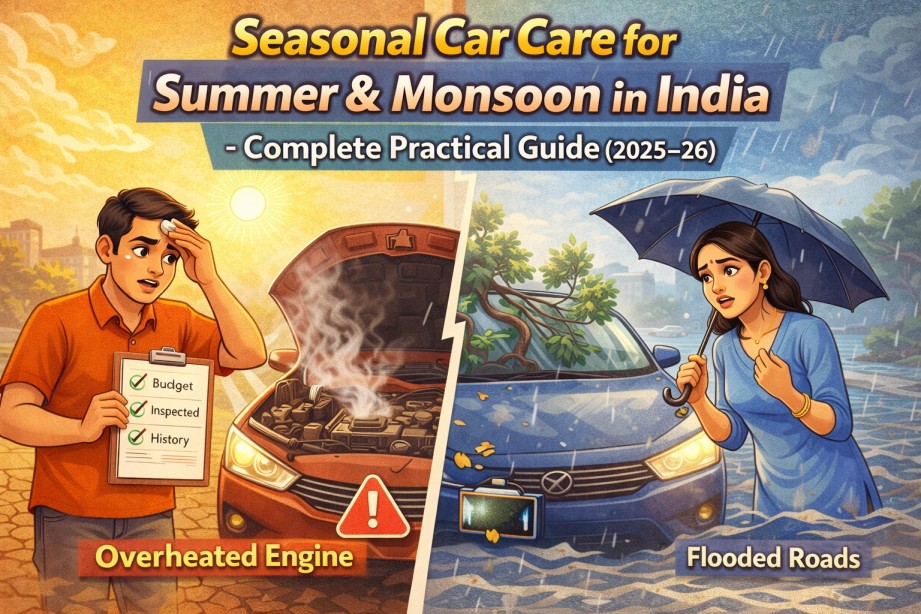
Seasonal Car Care for Summer or Monsoon
(What Indian Car Owners Must Do—but Mostly Don’t)
Indian weather doesn’t gently test your car.
It punishes it.
- Summer overheats engines
- Monsoon eats wiring, brakes, and metal
- Traffic + humidity multiply damage
Most breakdowns in India don’t happen because cars are bad.
They happen because seasonal care is ignored.
This guide is practical, Indian, and experience-based—not textbook advice.
Follow it, and you’ll save money, avoid breakdowns, and protect resale value.
Why Seasonal Car Care Is Critical in India
India has:
- Extreme heat (45°C+ in many cities)
- High humidity
- Flooded roads
- Dust + pollution
Cars designed globally age faster here if seasonal care is skipped.
Yet most owners think:
“Service toh ho hi rahi hai.”
Seasonal care is different from routine service.
Real-Life Story #1: AC Failure That Could’ve Been Avoided
Prakash from Nagpur ignored AC servicing before summer.
Result:
- Weak cooling in May
- Compressor failure in June
- Repair bill: ₹22,000
His regret:
“March mein AC check karwa leta toh bach jaata.”
Summer doesn’t forgive negligence.
Part 1: Summer Car Care Checklist (India Reality)
1. Engine Cooling System – Your Car’s Lifeline
Summer heat stresses:
- Coolant
- Radiator
- Hoses
- Water pump
What to Do:
- Check coolant level and colour
- Never top up with plain water
- Inspect radiator fins for blockage
Ignoring cooling issues can lead to engine overheating and head gasket damage.
2. AC System: Don’t Wait for It to Fail
Indian summers = AC survival mode.
Early Warning Signs:
- Takes longer to cool
- Airflow reduced
- Bad smell from vents
Smart Summer Care:
- AC gas pressure check
- Cabin filter replacement
- Condenser cleaning
👉 Related guide:
Why Your Car AC Is Not Cooling Properly in Summer
3. Battery Suffers More in Heat Than Cold
Most people blame winter—but heat kills batteries faster.
Summer causes:
- Electrolyte evaporation
- Internal plate damage
- Sudden failure
What You Should Do:
- Check battery voltage
- Inspect terminals for corrosion
- Replace weak batteries before peak summer
👉 Useful read:
How to Extend the Life of Your Car Battery
4. Tyres: Overheating = Blowout Risk
Hot roads increase:
- Tyre pressure
- Sidewall stress
- Burst risk
Summer Tyre Tips:
- Check pressure every 2 weeks
- Avoid overinflation
- Inspect sidewall cracks
👉 Learn more:
How to Check and Maintain Proper Tyre Pressure
Real-Life Story #2: Highway Breakdown in Peak Summer
Mehul from Ahmedabad drove 300 km in May.
Ignored:
- Coolant warning
- Slight temperature rise
Result:
- Overheated engine
- Highway towing
- Vacation ruined
- Repair bill: ₹35,000
Lesson:
“Temperature gauge ignore karna sabse mehenga mistake hai.”
Part 2: Monsoon Car Care Checklist (Most Ignored)
Monsoon damage is silent—and expensive.
5. Brakes: First Monsoon Casualty
Water + brake dust = trouble.
Common Monsoon Brake Issues:
- Reduced braking
- Rust on discs
- Noise after rain
What to Do:
- Brake inspection before monsoon
- Clean and lubricate calipers
- Avoid driving through deep water
👉 Understand basics:
Understanding Car Brakes and Suspension
6. Tyres & Aquaplaning Risk
Worn tyres + rain = loss of control.
Check:
- Tread depth (minimum 3 mm)
- Uneven wear
- Tyre age
Old tyres may look fine—but fail in rain.
7. Wipers & Washer System (Small Thing, Big Safety)
Most drivers replace wipers after they fail.
Wrong approach.
Before Monsoon:
- Replace wiper blades
- Check washer motor
- Use proper washer fluid (not plain water)
Visibility is safety.
8. Electricals & Water Damage
Modern cars have:
- Sensors
- ECUs
- Wiring everywhere
Monsoon risks:
- Short circuits
- Sensor failure
- Warning lights
Prevention Tips:
- Avoid flooded roads
- Never restart stalled car in water
- Dry underbody after heavy rain
👉 Important read:
How to Buy a Flood-Damaged Car Safely
(Same checks apply to your own car after floods.)
9. Rust Protection: India’s Silent Car Killer
Monsoon accelerates rust due to:
- Moisture
- Poor drainage
- Mud accumulation
What Helps:
- Underbody wash
- Drain hole cleaning
- Anti-rust coating (if needed)
👉 Deep dive:
Why Indian Cars Rust Faster & How to Prevent It
Myth vs Reality: Seasonal Car Care
| Myth | Reality |
|---|---|
| New cars don’t need seasonal care | They do |
| Monsoon damage is visible | Mostly hidden |
| AC gas lasts forever | Needs checking |
| Battery fails suddenly | Weakness starts early |
| Routine service is enough | Seasonal prep is extra |
Mistakes That Cost the Most
❌ Ignoring AC till peak summer
❌ Driving through flooded roads
❌ Delaying brake inspection
❌ Old tyres in monsoon
❌ Ignoring warning lights
❌ Skipping underbody wash
These mistakes don’t show immediate damage—but they guarantee future bills.
Editor’s Pick: Simple Seasonal Care Routine
Before Summer:
- Coolant check
- AC service
- Battery health test
- Tyre pressure check
Before Monsoon:
- Brake inspection
- Wiper replacement
- Tyre tread check
- Underbody wash
Time required: 1–2 hours
Money saved: Thousands
FAQs (Indian Car Owners Ask This Every Year)
1. Is seasonal servicing really necessary?
Yes. Indian climate makes it essential.
2. Can I skip AC service if cooling feels okay?
No. Early servicing prevents expensive failures.
3. Are underbody washes safe?
Yes, if done properly after monsoon drives.
4. How often should I check tyre pressure in summer?
Every 2 weeks.
5. Is rust prevention coating worth it?
Yes, especially in coastal or high-rain areas.
6. Should I drive through waterlogged roads?
Avoid if water is above half-wheel level.
7. What’s the most ignored seasonal care item?
Brakes and battery.
Final Thought: Indian Weather Doesn’t Care About Your Warranty
Your car doesn’t break because it’s weak.
It breaks because Indian seasons are harsh.
Seasonal car care is not optional here—it’s survival.
Do it on time, and your car will:
- Last longer
- Feel smoother
- Cost less
- Resell better
Strong CTA 🚗🌦️
👉 Save this seasonal checklist
👉 Share it before summer/monsoon begins
👉 Explore more honest, India-first car care guides on Car Insight Hub
Because in India, the best-maintained car isn’t the newest one—
it’s the most prepared one.
