
Every Indian car owner wants the same thing — a smooth engine, better mileage, and fewer unexpected repair bills.
We spend lakhs buying a car. We compare insurance plans, check mileage figures, and even research accessories. But one very simple maintenance mistake silently reduces engine life in thousands of cars across India.
That mistake is:
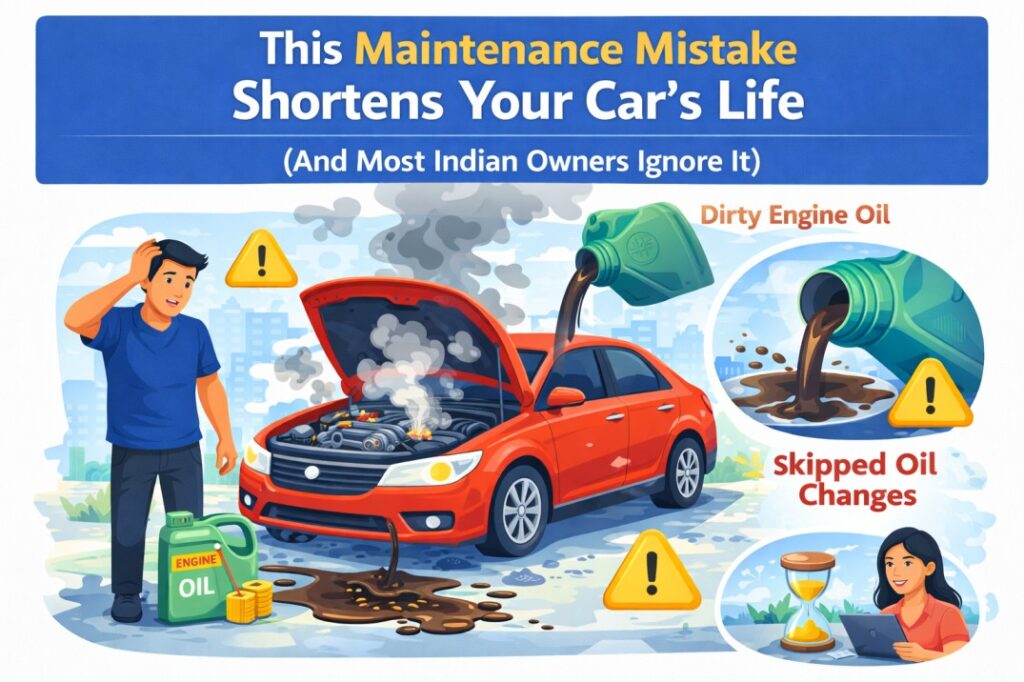
Delaying engine oil changes beyond what Indian driving conditions actually demand.
It may sound minor — but in Indian traffic and climate, this habit can shorten your car’s life significantly.
Let’s understand why.
Why Oil Change Timing Matters More in India
Most car manuals mention oil change intervals of 10,000 to 15,000 km.
But those numbers assume ideal driving conditions.
In India, most cars face:
- Heavy stop-and-go traffic
- Extreme summer heat (40°C+ in many cities)
- Dusty environments
- Frequent short-distance drives
- Long idling in traffic jams
These are classified as “severe driving conditions.”
Under such conditions, engine oil degrades faster.
If you want a complete schedule of what should be checked regularly, our detailed Car Maintenance Checklist – Monthly & Yearly Guide explains how preventive care protects long-term engine health.
What Actually Happens When You Delay Oil Changes
Engine oil does more than lubrication. It:
- Reduces friction
- Cools internal components
- Prevents sludge formation
- Cleans contaminants
- Protects against corrosion
When oil becomes old and contaminated:
- It thickens
- It loses viscosity
- It cannot protect moving parts properly
Here’s what slowly begins to happen.
1. Increased Engine Wear
Metal parts experience higher friction, causing gradual internal damage.
2. Sludge Build-Up
Old oil forms deposits that block oil passages.
3. Lower Fuel Efficiency
The engine works harder, reducing mileage.
If you’re already noticing mileage drop, you may also want to read How to Save Fuel in Daily Driving – Top 10 Tips for practical Indian driving habits.
4. Rough Engine Sound
The engine feels less smooth and slightly noisier.
5. Expensive Long-Term Repairs
Timing chain wear, turbo damage, or piston issues may occur if delays become frequent.
The dangerous part? This damage happens gradually — not instantly.
The Most Common Indian Mindset
Many owners think:
“My car is running fine. No warning lights. I’ll change oil at the next service.”
Modern engines are refined. They don’t show symptoms immediately.
But internal wear doesn’t wait for warning lights.
If you skip or delay servicing repeatedly, the long-term impact becomes visible only after several years.
In fact, if you’re wondering how service delays affect overall performance, our article on What Happens If You Skip Car Servicing? explains the real consequences.
Practical Oil Change Rule for Indian Drivers
Instead of following the maximum interval printed in the manual, follow this realistic approach:
- Mostly city driving: change oil every 7,000–8,000 km
- Mixed driving: 8,000–10,000 km
- Very low yearly usage: change at least once a year
This small adjustment can extend engine life significantly.
If you want to understand how smart maintenance reduces ownership stress, read our guide on How to Keep Your Car Running Smoothly for a complete ownership approach.
Turbo Engines Need Extra Care
Modern Indian cars increasingly come with turbo petrol and diesel engines.
Turbo engines:
- Operate at higher temperatures
- Depend heavily on oil quality
- Are more sensitive to delayed oil replacement
Stretching oil intervals in turbocharged cars increases repair risks.
If your car has a turbo engine, never push oil change intervals to the maximum limit.
Synthetic Oil Is Not Unlimited Protection
Synthetic oil offers better performance and heat resistance.
But in Indian traffic and climate:
- Heat accelerates oil breakdown
- Traffic increases stress
- Dust contamination affects quality
Even synthetic oil needs timely replacement.
The Real Cost Comparison
Oil change cost:
₹3,000–₹7,000 (depending on car)
Major engine repair:
₹40,000–₹2,00,000+
Preventive maintenance is always cheaper than corrective repairs.
If you’re planning long-term ownership, our Car Maintenance Cost Guide India 2025 (Model-Wise) helps you understand how regular care reduces total expenses.
Why This Also Affects Resale Value
Indian used car buyers today are smarter.
They check:
- Service records
- Engine smoothness
- Maintenance consistency
A well-maintained engine:
- Gets better resale value
- Builds buyer trust
- Reduces negotiation pressure
Irregular oil changes often reduce resale price significantly.
Simple Habit That Protects Your Car
Here’s what you should do:
- Note your last oil change date and kilometer reading.
- Track your usage monthly.
- Don’t wait for maximum interval.
- Always change oil and oil filter together.
- Use recommended oil grade.
That’s it.
One small habit can protect your biggest automotive investment.
Frequently Asked Questions (FAQs)
1. How often should engine oil be changed in India?
For mostly city driving, every 7,000–8,000 km is recommended. For mixed driving, 8,000–10,000 km is generally safe.
2. Can delaying oil change reduce engine life?
Yes. Repeated delays increase friction, cause sludge formation, and accelerate internal wear.
3. Is synthetic oil enough to prevent engine damage?
Synthetic oil provides better protection, but it still needs timely replacement, especially in Indian traffic conditions.
4. Does delayed oil change affect fuel efficiency?
Yes. Old oil increases engine friction, which can reduce mileage over time.
5. What is the biggest risk of skipping oil changes?
The biggest risk is long-term engine damage that may lead to expensive repairs such as timing chain or turbo failure.
