
Most Indian car owners miss these basic truths about their cars and pay heavily later. Real-life stories, myths vs reality, mistakes to avoid, FAQs, and practical advice every driver must read.
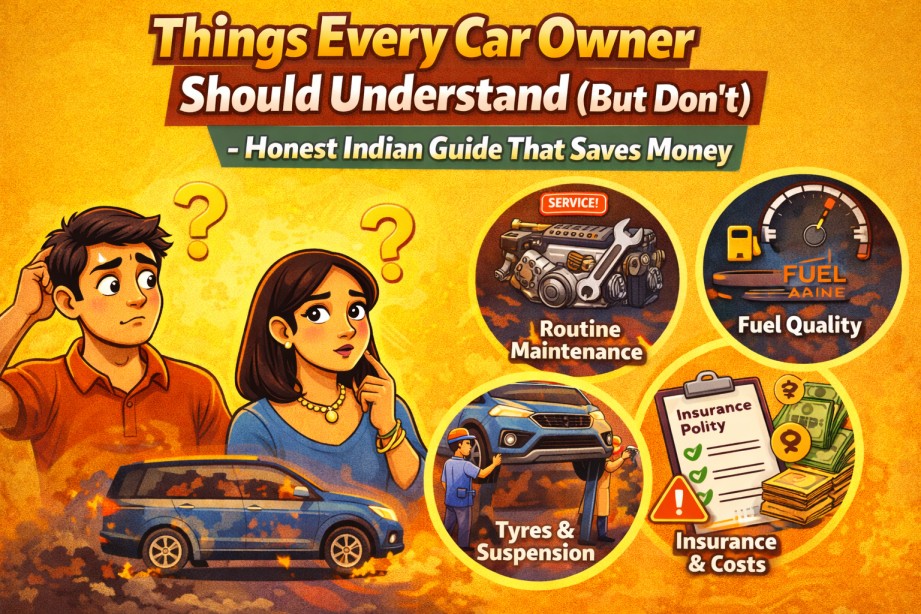
Things Every Car Owner Should Understand (But Don’t)
Most Indian car owners think they understand their car.
They know:
- How to start it
- How to drive it
- How to fill fuel
But that’s surface-level knowledge.
The real costs, problems, and regrets begin because of things nobody explained properly—not the dealer, not friends, not YouTube reels.
This article is about those uncomfortable truths.
Not theory. Real Indian ownership reality.
If you own a car (or plan to), this will save you money, stress, and regret.
Why Most Car Owners Learn the Hard Way
In India, cars are sold emotionally:
- “Best mileage”
- “Low maintenance”
- “Trusted brand”
But ownership is long-term, not a delivery-day celebration.
Most people realise the truth only when:
- Service bills rise
- Car feels weak
- Mileage drops
- Repairs start early
That’s when regret hits.
Real-Life Story #1: “Nobody Told Me This Would Cost So Much”
Amit, a first-time car owner from Nagpur, bought his car happily.
First year? Perfect.
Second year?
- Insurance renewal shock
- Tyre replacement quote
- Battery weakening
- Service costs rising
His line:
“Gaadi lene ka paisa plan kiya tha, rakhne ka nahi.”
That’s where most owners go wrong.
Truth #1: Buying a Car Is Cheap. Owning It Is Not.
Most people budget for:
- Ex-showroom price
- EMI
They forget:
- Insurance every year
- Fuel forever
- Servicing
- Tyres
- Battery
- Wear-and-tear parts
Over 5–7 years, ownership costs can equal 30–50% of car price.
👉 Eye-opening read:
Car Maintenance Cost Guide India 2025
Truth #2: Mileage Depends More on You Than the Car
People blame:
- Engine
- Fuel quality
- Brand
But ignore:
- Driving habits
- Tyre pressure
- Load
- Traffic behaviour
Aggressive acceleration, half clutch driving, and poor maintenance can reduce mileage by 20–30%.
👉 Related:
How to Save Fuel in Daily Driving – Top 10 Tips
Truth #3: Warning Lights Are Not Suggestions
Indian mindset:
“Light aa rahi hai, gaadi toh chal rahi hai.”
That’s dangerous.
Warning lights mean:
- Something is wrong
- Something will get worse
- Something will cost more later
Ignoring them converts ₹2,000 fixes into ₹20,000 repairs.
👉 Must-read:
Real Meaning of Car Warning Lights – Indian Guide
Real-Life Story #2: A Small Sound That Became a Big Bill
Pooja from Bhopal noticed a slight noise while braking.
She ignored it for months.
Result:
- Brake pad worn out
- Disc damaged
- Complete brake overhaul
Repair bill: ₹14,500
Her regret:
“Agar pehle dikhaya hota, ₹3,000 mein kaam ho jaata.”
Truth #4: Service Intervals Are Not Flexible Suggestions
Skipping service doesn’t save money.
It delays expenses and multiplies them later.
Problems with delayed servicing:
- Engine oil sludge
- Reduced engine life
- Poor mileage
- Warranty issues
👉 Learn basics:
What Happens If You Skip Car Servicing?
Truth #5: Dealership Advice Is Not Always in Your Interest
Dealers aim to:
- Increase bill value
- Sell add-ons
- Push replacements early
This doesn’t mean they’re bad—but you must be informed.
Examples:
- Premature part replacement
- Unnecessary additives
- Expensive accessories
A little knowledge protects your wallet.
Truth #6: Bigger Car Doesn’t Mean Safer or Better
Indian belief:
“Badi gaadi = zyada safety”
Reality:
- Safety depends on build quality
- Driving behaviour matters more
- Bigger cars cost more to run
Choose a car based on use, not size.
👉 Helpful comparison:
Hatchback vs Sedan vs SUV – Which Is Right for You?
Truth #7: Short Trips Are Worse Than Long Drives
Many city users think:
“Bas office aana-jaana hai.”
Frequent short trips:
- Don’t warm the engine fully
- Increase engine wear
- Reduce battery life
- Increase carbon buildup
Occasional highway drives actually help engine health.
Myth vs Reality: Car Ownership Edition
| Myth | Reality |
|---|---|
| New car needs no care | Every car needs care |
| Mileage is fixed | It depends on usage |
| Skipping service saves money | It increases costs |
| Bigger car is always safer | Safety rating matters |
| Only accidents cause damage | Daily habits do more |
Mistakes Most Car Owners Make (And Regret Later)
❌ Ignoring early warning signs
❌ Delaying small repairs
❌ Overloading the car
❌ Poor tyre maintenance
❌ Blind trust in service centres
❌ Emotional decisions
These don’t hurt today.
They hurt after warranty ends.
Editor’s Pick: 7 Things Smart Car Owners Do Differently
- Listen to new sounds early
- Follow service schedule strictly
- Keep tyre pressure correct
- Warm engine gently
- Track fuel and mileage
- Read owner’s manual once
- Fix small issues immediately
Simple habits. Long-term savings.
FAQs (Real Questions Indian Owners Ask)
1. Is owning a car in India expensive?
It can be, if you’re unprepared. Planning reduces stress.
2. How long should a car last?
With good care, 10–15 years easily.
3. Does brand matter a lot?
Less than maintenance and driving habits.
4. Should I service only at authorised centres?
During warranty, yes. Later, good independent garages work too.
5. Are modern cars less reliable?
They’re more complex, not less reliable.
6. Can bad driving habits reduce resale value?
Yes. A poorly driven car feels old early.
7. What’s the most ignored part of car care?
Tyres and brakes.
Final Thought: Cars Punish Ignorance, Not Ownership
Cars don’t demand perfection.
They demand basic understanding.
Most problems don’t come from bad cars.
They come from uninformed owners.
The more you understand your car:
- The less you panic
- The less you overpay
- The longer it serves you
Strong CTA 🚘
👉 Save this article
👉 Share it with a new car owner
👉 Explore more honest, India-first car guides on Car Insight Hub
Because the smartest car owner isn’t the richest one—
it’s the most informed one.
